journals


October 27, 2009 – Champaign, IL and New York, NY –The University of Illinois Press, the not-for-profit publishing division of the University of Illinois, and JSTOR, the preservation archive and research platform that is part of the not-for-profit ITHAKA, announced an agreement today to make leading journals from the Press available worldwide as part of the Current Scholarship Program. 

The Current Scholarship Program is a new collaboration initiated by University of California Press and JSTOR and first announced on August 13, 2009.  Together, participants in this Program aim to create an improved online work environment for faculty and students by bringing complete journal runs from multiple publishers together in one place, to ease the burden on librarians of negotiating separate license agreements with a multitude of publishers and independent titles, and to promote a more cost-effective publishing environment for the scholarly community.

“For the last several years the University of Illinois Press and JSTOR have worked together through the History Cooperative, building strong ties of respect and trust,” said Willis G. Regier, Director of the University of Illinois Press.  “We take this step with the blessings of our colleagues in the University of Illinois Library and with high anticipation for our journals.”

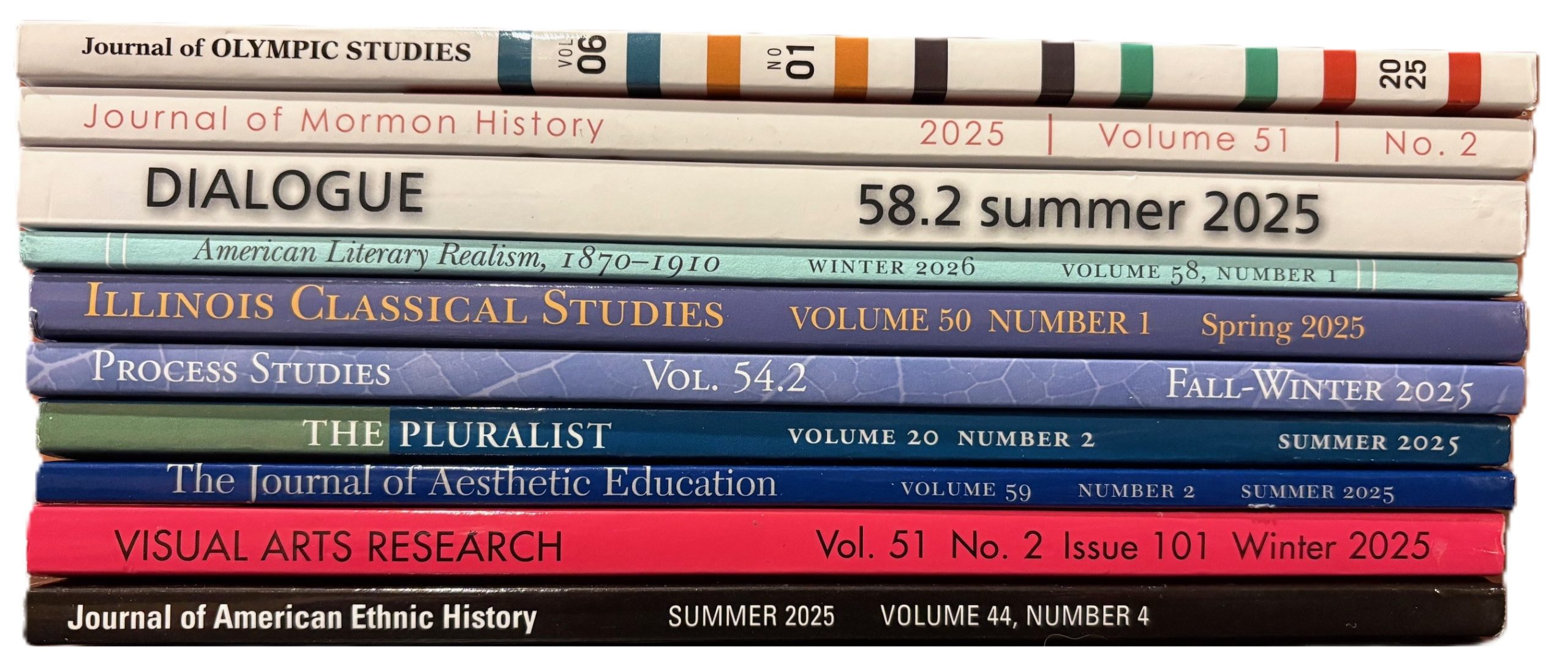
Current and historical content from at least ten University of Illinois Press-published journals will be available on a re-designed JSTOR in 2011.  This will offer faculty and students around the world access to current issues alongside back issues and a growing set of primary source materials from libraries easily and seamlessly. JSTOR’s nearly 6,000 library participants worldwide will be able to license the Press’s current journals, either individually or as part of current issue collections, together with JSTOR back issue collections in a single transaction. University of Illinois Press-published journals available as part of the Program will include American Journal of Psychology, American Music, Journal of Aesthetic Education, and Journal of American Ethnic History among others. The journals will also be preserved in Portico, the digital preservation service that is also part of ITHAKA.

“The University of Illinois Press has been a leader in promoting digital scholarship, innovation, and new publishing collaborations in the humanities,” said Michael Spinella, JSTOR Managing Director. “The Press not only shares our aim to deliver excellent scholarship at good value to libraries, faculty, and students, but brings a spirit of cooperation and a strong desire to support new forms of scholarship using digital technology.  We are thrilled to be working with them to advance scholarship through the Program.”

With the addition of the University of Illinois Press, the current issues of at least forty journals will be available from JSTOR for the 2011 subscription year. Other organizations are being encouraged to join the Program.

Rebecca Simon, Associate Director of University of California Press and Director of Journals + Digital Publishing added, “It is terrific that the University of Illinois Press is joining this effort and bringing their fine portfolio of titles to the Program.  The more like-minded participants we have, the greater the benefits we are able to deliver to libraries and to users.”

For more information, see: http://www.jstor.org/page/info/about/programs/currentScholarship.jsp

In the Summer 2008, the University of Illinois Press published a special issue of the Journal of Aesthetic Education featuring discussions of an arts education curriculum project using the work of seventeenth-century Dutch painter, Rembrandt van Rijn, as an online teaching resource. Ralph A. Smith, founder and former editor of JAE and professor emeritus of cultural and educational policy at the University of Illinois at Urbana-Champaign, guest-edited the issue, and recently announced the formal launch of the NEH-supported Web site, Rembrandt and Collections of His Art in America.

Congratulations to Prof. Smith and his colleagues!

Inside Higher Ed reports on a recently released paper that anazlyed the cost of printing humanities and social science journals.

The analysis of the eight journals was conducted to help disciplinary associations get a better understanding of the economics of their publishing ventures, at a time of increasing pressure to embrace the open access movement, in which research is available online and free.

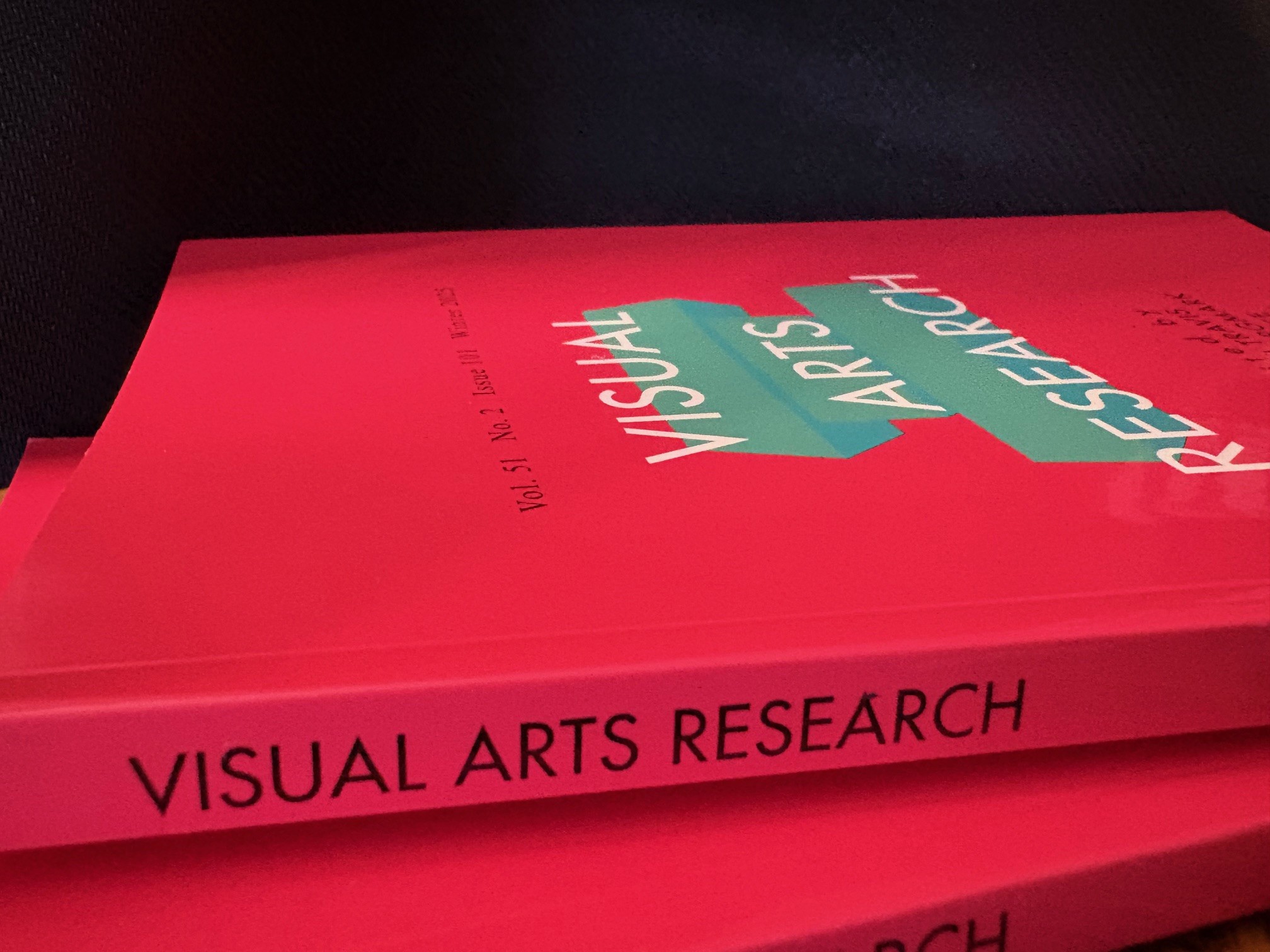
The University of Illinois Press is pleased to announce the launch of the online archive for Visual Arts Research.

The current issue of VAR is available FREE as open access for a limited time.

Visual Arts Research provides a forum for historical, critical, cultural, psychological, educational and conceptual research in visual arts and aesthetic education. VAR remains committed to its original mission to provide a venue for both longstanding research questions and traditions alongside emerging interests and methodologies.

I’m really excited about one of our newest journals here at UIP. It’s the American Journal of Play. No, not “play” as in Shakespeare. There are already plenty of journals examining that subject. But rather “play” as in tag, Monopoly, wooden blocks, and Mario Kart. As a parent to two young girls, I’m interested to see what the Journal will have to offer not only to psychologists, historians, and educators, but also to ordinary parents interested in understanding how they can facilitate the growth of their children through play.

Check out the tables of contents for issues 1 and 2 here.

*****

Jeff is the Associate Journals Manager at the University of Illinois Press

The following is Lisa S.’s way of saying Happy Friday to all.

Working in the journals department, I correspond with a wide range of people from all over the world. Scholarly publishing can often be hectic and stressful, but once in awhile, you get a charming email that puts the spring back in your step and a smile on your face. Below is an edited version of one such email I received earlier this year. Some names have been changed to protect the innocent.

From: Prof. Q. Quiggley [mailto:qquiggley@university.com]
Sent: Friday, March 14, 2008 1:33 PM
To: Lisa Savage
Subject: Page proof for review

Dear Ms. Savage:


I hope this reaches you in good health.  My long-time friend, R. S., told me of your unfortunate accident.  I, myself, nearly shared your misfortune. I was trying to negotiate a steep brick walkway covered with a thin film of ice, which was not apparent from even a few feet away. I couldn’t go forward or back without slipping. I was clinging to the window frame of an upscale restaurant, trying to figure out what to do, when I became aware of laughter. The customers within were laughing at me!  Fortunately, I didn’t add physical injury to humiliation, but managed to get downhill by clinging to various prominences of the architecture. Whew! As Bette Davis said, “Old age isn’t for sissies.” So, you have the best wishes from a decrepit old professor.


Again, best wishes,

Q. Quiggley


The truly unfortunate thing was that I had not had an “unfortunate accident.” When I told him that this was a case of mistaken identity, he bashfully replied that he must’ve misheard R. S.: “R. S. doesn’t make many mistakes.  I make them all of the time. Awww. Well, that’s what my wife with the super Mensa IQ tells me anyhow.”


Awww, is right.


 Here’s Heather on creative communication strategies:

We journals production editors have noticed how hard it can be to get important information, resources, and instructions to the busy editors and contributors with whom we work.

Recently we were talking about updating the content of the materials and messages we send out, but now we realize that our methods of delivery (text-heavy PDFs and e-mails) are more likely to be the primary problem.  They’re boring.

Henceforth, we think we should communicate via comic book.  Or maybe even a short animated film.

We would be in good company if we chose to inform and educate in this method.  Here are a few of my favorite educational comics for your reading pleasure.

There’s Bound by Law, the comic from Duke’s Center for the Study of Public Domain.

The World Intellectual Property Organization has comics on trademarks and copyright.

Creative Commons has several comics, but my favorite is an animated short video from 2002 that explains the basic concepts of CC.

I think we’re going to need an intern and some fancy new Macs, at the least, please!