As an acquisitions editor, I often feel like my job can expand or contract based on how much time and energy I have, kind of like a fire. This is probably true of all academic acquisitions editors (and maybe people in academia or publishing more broadly). For me, I often wish I could do more editing and really talk with authors about where my edits are coming from. Because I can’t do all of this work, I am excited to recommend resources that can do this. Below are five books that I wish authors would read before we talk—or really anytime!
1. They Say / I Say: The Moves That Matter in Academic Writing by Gerald Graff and Cathy Birkenstein (Norton)
As a graduate student and first-year writing instructor, I taught the third edition of this book. When I moved into publishing, I thought that my continued attachment to it was mostly emotional, but the more books I work on, the more I realize that even the most advanced scholarly writers sometimes need to remember the basics: say why it matters, foreground your voice, integrate secondary sources, provide metacommentary. Consulting any text about how to do this in writing would probably be useful, but I am especially drawn to this book because their writing is so clear. “So what? Who cares?” they ask, to reinforce why it matters. “Don’t be a hit-and-run quoter,” they write, to reinforce attribution. I wrote these comments in the margins of my students’ writing, and now I write them in the margins of book manuscripts that I edit.
2. The Book Proposal Book: A Guide for Scholarly Authors by Laura Portwood-Stacer (Princeton)
As I wrote on this blog previously, book proposals serve two purposes: they can be an informal communication device between the author and editor, and they can be a formal document that an editor sends for review in the hopes of offering an early contract. In the last year, I have used book proposals more often, and I’ve seen a lot of success, not only in terms of contracting, but in my understanding very early on the author’s goals. The better a book proposal is written, the easier it is for me to guide the writer and the project, either at Illinois or even to a different press! I’ve recommended this book to many authors and have gotten much better quality proposals as a result. I’ve also heard from many authors, “Oh, I know how to write a proposal.” And that may be true. But there is a difference between writing a proposal and writing something really effective that will save both the author and the editor time and energy. If you’ve never written a proposal before, or if you haven’t written one for some time or are pitching to a new editor, I highly recommend reading and employing the strategies in this book. Each chapter covers one aspect of the proposal, with additional chapters on reaching out to publishers and navigating the publishing process.
3. Make Your Manuscript Work: A Guide to Developmental Editing for Scholarly Writers by Laura Portwood-Stacer (Princeton)
One of the things I most want to do more of is provide feedback on writing. But of course, when times get busy – when I have to prepare projects for meetings, make presentations, travel to conferences, meet with authors, launch books, respond to cover design… – providing feedback on writing takes a backseat. I’m often best at providing a bird’s eye view of a project and giving examples of where aspects aren’t working, but I can rarely provide a true developmental edit on an entire manuscript. I suspect the same is true of most acquisitions editors. It’s also true that hiring a freelance developmental editor is not accessible for many scholarly writers, which is where this book comes in. It provides a framework for setting goals, assessing what you have so far, and executing a plan to develop your own project. A book like this is so helpful because it will get an author away from making tiny changes over and over again to making significant revisions that impact the manuscript’s success. I also think authors could use a book like this as a framework and tweak the processes to work best for them.
Both of Laura Portwood-Stacer’s books are in Princeton’s Skills for Scholars series. I would also recommend following the author on social media or at her website Manuscript Works.
4. The Dissertation-to-Book Workbook: Exercises for Developing and Revising Your Book Manuscript by Katelyn E. Knox and Allison Van Deventer (Chicago)
I work with many early-career scholars who are revising their dissertations into book manuscripts. While many have heard terms like “revised dissertation,” they don’t really have a framework for understanding the process of how one revises something that already looks like a manuscript into a first book. At a time when book sales are down, especially for first books and revised dissertation projects, more rigorous and substantial revising will probably be necessary for the next generation of scholars. This book gives authors an iterative framework for revision. I really appreciate how it asks authors to do prep work outside of the manuscript so that once they work in it, that work will be more effective. What I also appreciate about this book and Make Your Manuscript Work is that they help authors set realistic goals with the time they have and the work they need to do. They don’t romanticize the writing process; rather, they realize that for many academics, writing and publishing are job requirements, and these books want to help them fulfill that.
This book is in Chicago’s series Chicago Guides to Writing, Editing, and Publishing. There are many other great resources here!
5. Becoming the Writer You Already Are by Michelle R. Boyd (Sage College)
A few years ago, I wrote a longer review of this book for Feeding the Elephant, a blog for scholarly communications folks. Since then, this book has lived on my recommendations list because, like the books I recommend above, it intervenes in a writer’s life to meet them where they are and try to make what they need to do more successful. Unlike working on the manuscript itself, or its supporting documents, this book is about understanding and building a sustainable writing practice, which is invaluable to any author embarking on writing something as substantial as a monograph. When an author has a better understanding of their writing process, it helps me better advise them. It also helps them set realistic goals for finishing a project in a timely way.
While I recommend all of these books, I think it is just as important for authors to read widely about writing and find the resources that work best for them. That might be a particular chapter or section of one of these books, or it might be something else entirely. The important part is to think intentionally about writing as a professional practice and to make the pathways through publishing writing as smooth as possible.
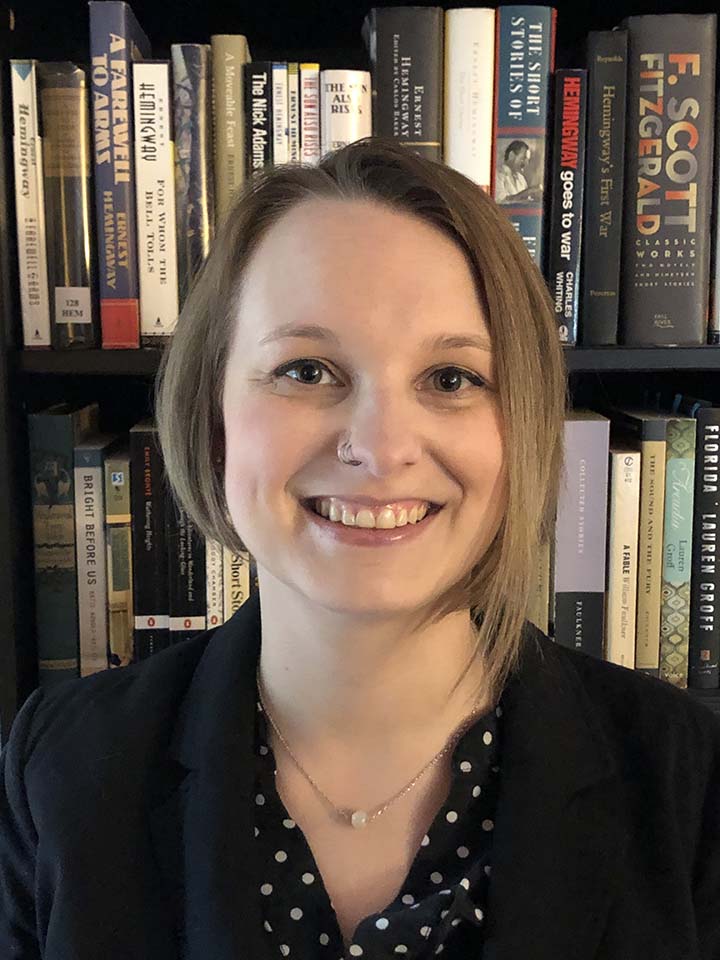
Alison Syring is an acquisitions editor at the University of Illinois Press. She has degrees in English literature and history from the University of Maryland, an MA in writing from Johns Hopkins University, and an MFA in creative writing from the University of Illinois. She started in publishing as a production editor and worked for several years as a technical writer. Alison began as a Round the Press intern through the graduate English department, after which she was hired as a full-time assistant editor. She has been acquiring in history and religion since 2020. Alison continues to acquire and grow a flagship series—the Working Class in American History series; diversify our Mormon studies list and broaden into religious studies; and maintain our commitment to early-career scholars by starting an Outstanding Dissertation in Disability History prize published through our Disability Histories series.