
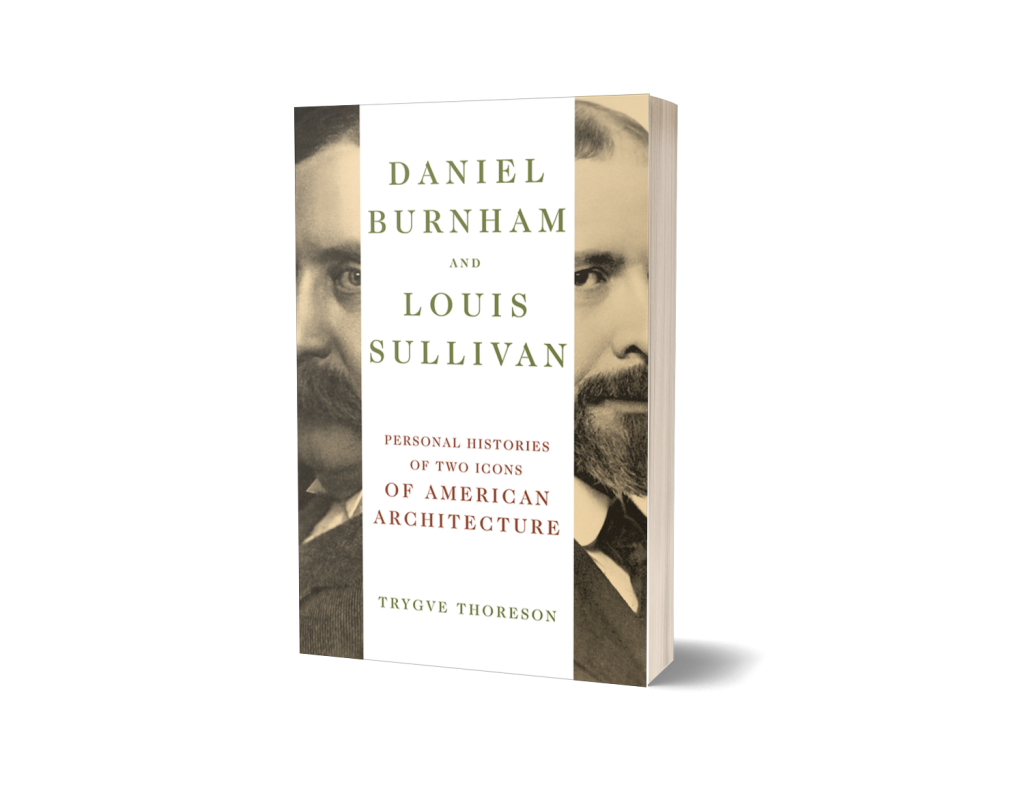
Trygve Thoreson, author of Daniel Burnham and Louis Sullivan: Personal Histories of Two Icons of American Architecture, answers questions about his new book.
Why did you decide to write this book?
A number of years ago, as a community-college professor I put together a tour of Chicago architecture for my introductory humanities students. It was a course covering all aspects of culture and art, it and took me out of my comfort zone of literary studies (specifically nineteenth-century American literature) and into a brave new world of architectural history that I had previously only entered by fits and starts and tangentially. But there’s something about encountering the interface between the famous names you’ve only heard of and the real-world experience of standing right next to, walking through, and sometimes putting your hands on the actual and extraordinary bricks-and-mortar-and-glass objects they created. In my book I talk about seeing the intricate vegetative ironwork of Louis Sullivan’s Schlesinger and Mayer department store and being given to understand that a major influence on Sullivan’s infusion of the natural world into his commercial projects were the American Transcendentalist writers. “All right,” thought I, “now you’re on my turf.” All that led to a long journey that culminated in post-retirement volunteer gig at that Chicago Architecture Center, which in turn led many happy hours in the architectural archives in the Art Institute of Chicago, which then led to a conviction that not just Sullivan, but his sometime colleague and sometime rival Daniel Burnham as well, viewed their architecture through lenses soaked through with cultural and religious and personal influences of their time and place. And that’s the story I eventually felt compelled to tell.
What is the most interesting discovery you made while researching and writing your book?
The ways in which both men sought to infuse spirituality and spiritual uplift into even the most utilitarian of commercial structures. Most writers tend to focus on the elements that set these two architects apart from one another—the differences in personal and artistic temperament and in the contrasting attitudes they displayed toward the historic styles that surrounded them. Those differences are there, to be sure, but I like to explore the ways in which their transcendental idealism actually, in some ways, brought them together, at least in terms of artistic intention.
What myths do you hope your book will dispel or what do you hope your book will help readers unlearn?
In addition to the above answer, I would hope that readers would come away not seeing Burnham and Sullivan as engaging in some kind of architectural battle royal with one (proto-modernist or Prairie School) winner and one (traditionalist) loser. Instead, each architect had his own strengths and weaknesses, and neither one can fit into the simplistic categories we seem inclined to place them in.
Which part of the publishing process did you find the most interesting?
My first job out of school was in educational publishing, so many parts of the process are familiar to me. Still, I always remain impressed by the collaborative spirit of the enterprise. So many friends and colleagues pitched in in various ways to make this book happen, and I was pleased to see that the editorial side remains much as I remember it—diligent, eagle-eyed editors still working earnestly to make a product they can be proud of.
What is your advice to scholars/authors who want to take on a similar project?
Make archival collections your second home.
What do you like to read/watch/or listen to for fun?
Oh, wow. My playlist probably resembles those of many of my fellow boomers—heavily weighted toward the standards of the great popular songwriters and performers of the 1920s through the 1960s, with a few leakages into the 1970s and beyond. Current most listened-to favorite, Cole Porter’s Begin the Beguine as sung by Michael Feinstein (in my view a perfect marriage of melody and lyric and singer and orchestra). Reading habits are fairly eclectic these days—basically whatever comes to hand that hooks me or that friends who know what I like give me. Currently: Scott Eyman’s comprehensive biography of Cary Grant (see? ‘30s and ‘40s—one of my cultural sweet spots), Andrew Ross Sorkin’s 1929, and Daniel Swift’s The Dream Factory, which tells the story of Shakespeare’s first playhouse. On the subject of architecture, my current favorite is Louis Sullivan’s Idea by Tim Samuelson and Chris Ware. For a readable introduction to the history of architecture—a kind of readers’ guide to architecture’s “greatest hits”–I’d go with Witold Rybzynski’s The Story of Architecture.
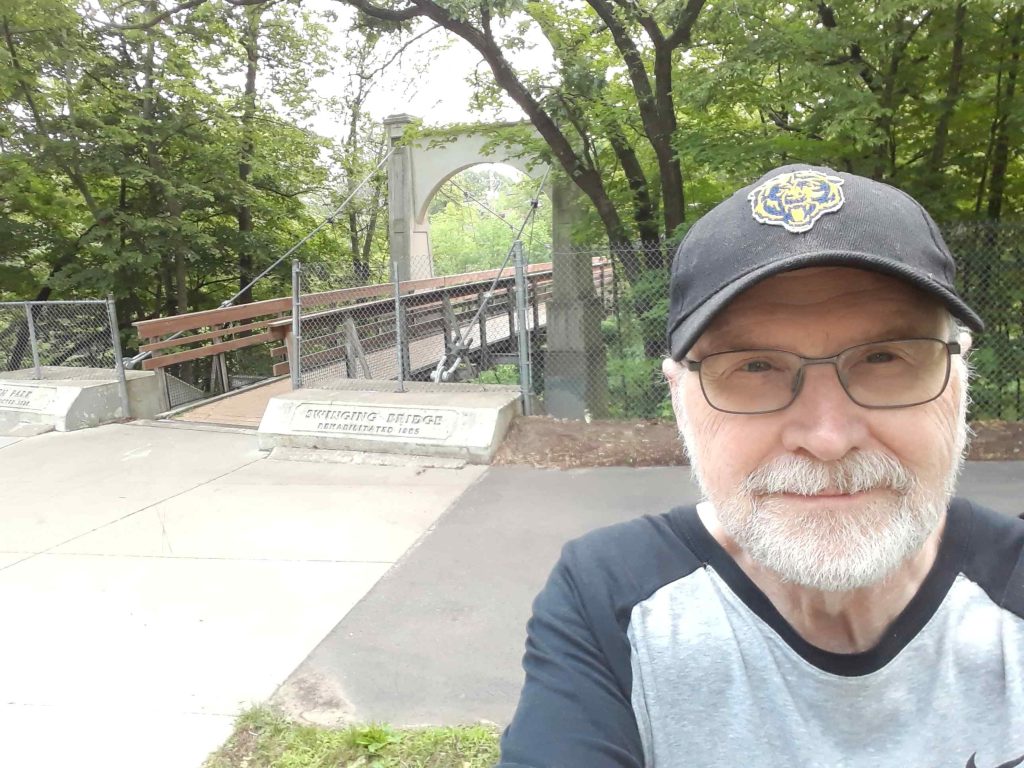
Trygve Thoreson is Professor Emeritus of English and Humanities at William Rainey Harper College. At Harper, he designed and developed architecture tours of downtown Chicago for students in the humanities and in retirement has served as a volunteer host at the Chicago Architecture Center. Thoreson is the author of Harper College, The First Fifty Years: William Rainey Harper College 1967-2017.