
Happy Polish American Heritage Month! Join us in celebrating the month once again with a reading list of books and journal articles from Polish American Studies, The Polish Review, and Journal of American Ethnic History.
JOURNAL ARTICLES
Polish American Studies is the Polish American Historical Association’s interdisciplinary, double-blind refereed scholars journal. The editor welcomes scholarship including articles, edited documents, and related materials with all aspects of the history and culture of Poles in the Western Hemisphere.
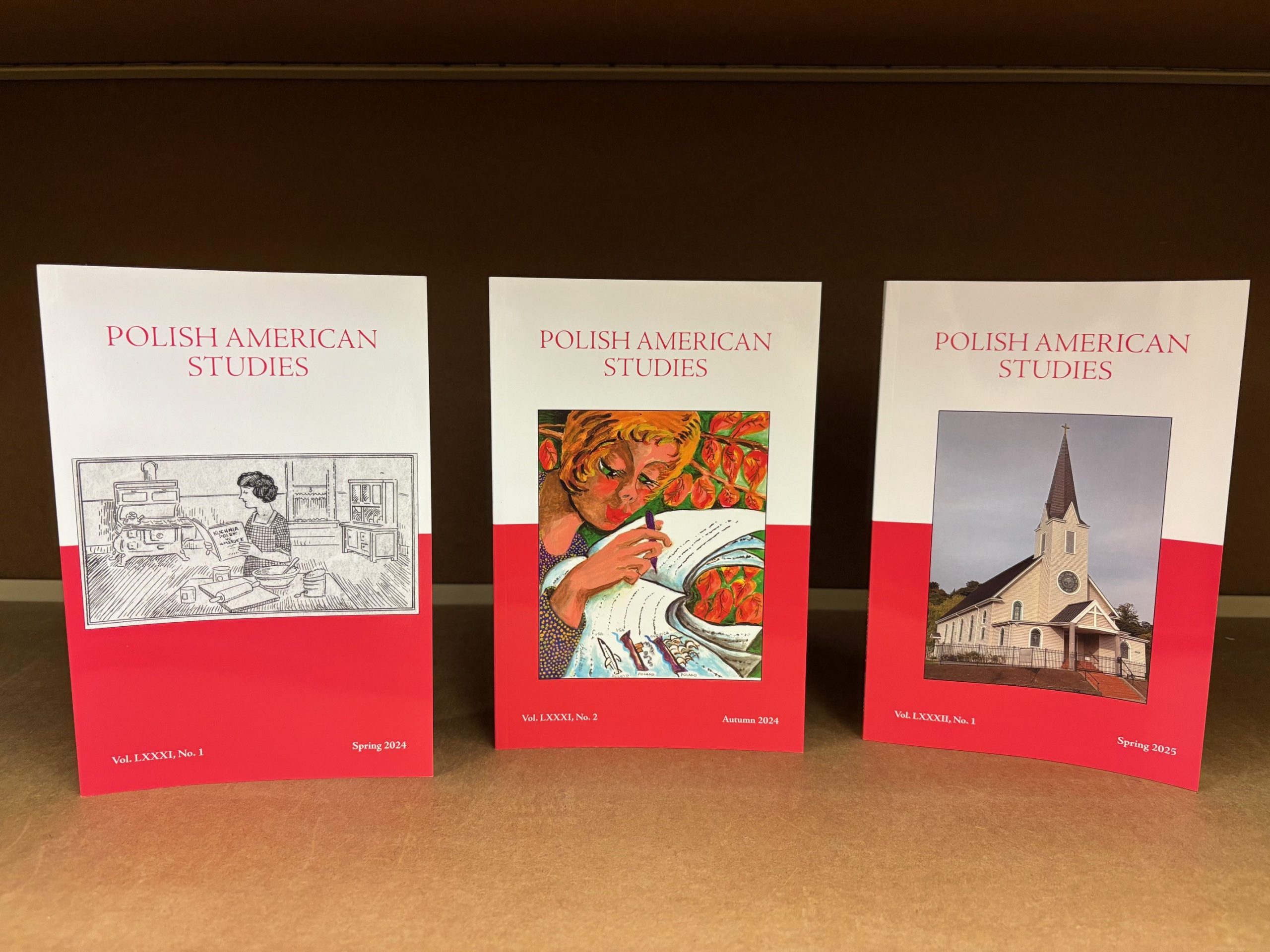
“Portrait of a Lady: The Image of Polish American Women in Ameryka Magazine as a Soft Power Instrument of US Cold War Public Diplomacy, 1959–1969” by Anna Podciborska
This article examines Ameryka, a Polish-language magazine published by the US Information Agency from 1959 to 1992. By highlighting the stories of successful Polish American women, the magazine emphasized a dual narrative of professional achievement and domestic harmony that presented an idealized image of American life.
“The Other Diaspora: Measuring Assimilation Among Polish Gay Men in Chicago” by Hubert Izienicki
Migration scholars have traditionally used four measures to assess immigrants’ level of assimilation in the United States: socioeconomic status, spatial concentration, language assimilation, and intermarriage. In this study, Izienicki examines the validity of each measure as it pertains to gay men immigrants and proposes gay community attachment as an additional measure of assimilation.
The Polish Review is a multidisciplinary, peer-reviewed scholarly quarterly devoted to Polish history, literature, art, sociology, and other related topics, and is the official journal of The Polish Institute of Arts and Sciences of America.
“The Political Unconscious of Polish 1990s Cinema” by Sebastian Jagielski and Robert Ga??zka
This article analyzes Andrej ?u?awski’s 1996 film Szamanka [She-Shaman], which was based on a screenplay by feminist writer Manuela Gretkowska. Jagielski and Ga??zka contend that She-Shaman provocatively revives a longstanding fear of invasion by “wild” provincial migrants who threaten to infect the health body of the middle class, on the one hand, and, on the other, of strong women who reject the repressive language of patriarchy.
“Introducing Jadwiga Maurer’s Biography as Writer and Scholar” by Beata Dorosz and Gerard T. Kapolka
The article presents an outline biography of Jadwiga Maurer, a writer who spent most of her adult life on university campuses in the US and whose prose works, highly regarded in émigré literary circles, had not achieved the status of mainstream authors of the postwar Polish diaspora.
Journal of American Ethnic History
The Journal of American Ethnic History addresses various aspects of North American immigration history and American ethnic history and is the official journal of the Immigration and Ethnic History Society.
“Achieving Their Goals and Adopting New Norms: Polish Immigrant Women and American Institutions in Early Twentieth-Century and Interwar Chicago” by Sylwia Ku?ma-Markowska
This paper examines the interactions of Polish immigrant women with American institutions in early twentieth-century and interwar Chicago. The author argues that these interactions were multi-faceted; Polish women often requested these interventions to achieve individual goals or solutions. However, assistance from American institutions did at times require adherence to normative narratives and behaviors.
BOOKS
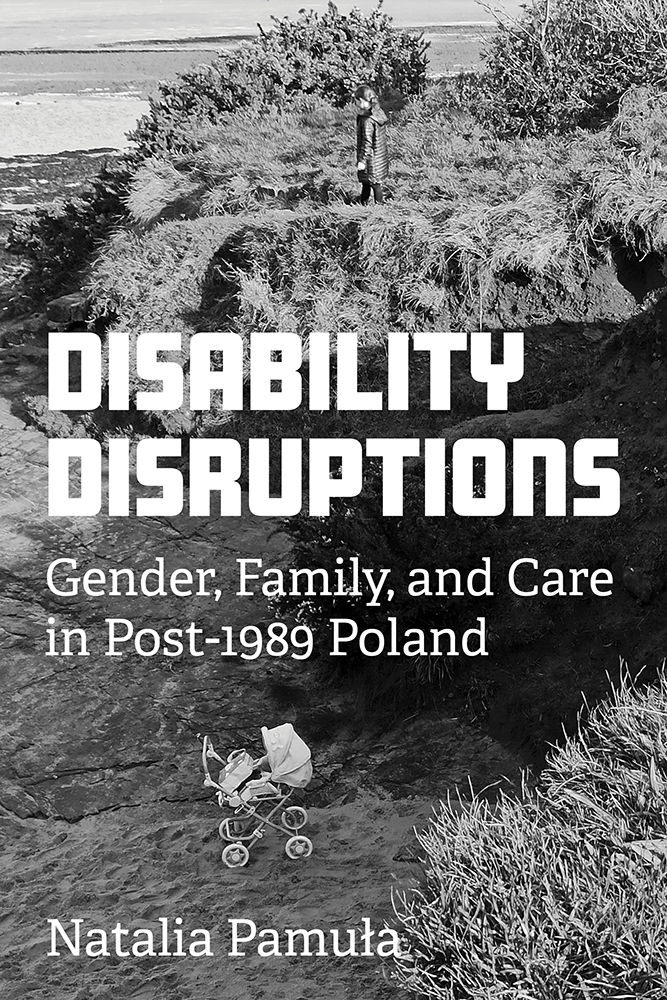
Disability Disruptions: Gender, Family, and Care in Post-1989 Poland
By Natalia Pamula
In postsocialist Poland, the state offers no support for its disabled citizens and often abandons families to care for them. Natalia Pamula draws on memoirs, novels, journalistic accounts, protest statements, and interviews to excavate the voices of disabled people and caregivers caught within a system that both privatizes care and denies aid to families.
A rich blend of activism and analysis, Disability Disruptions ventures outside Anglophone notions of disability to highlight how Poland’s disabled people and caregivers overcome lack of recognition, resist social death, and rewrite public memory.