Among our tasks and responsibilities, acquisitions editors often speak on publishing panels at conferences and other meetings. I had the good fortune to participate in a publishing panel at the most recent American Historical Association (AHA) meeting in Chicago in January 2026. For several years, Dr. Jessica Pliley, professor of history at Texas State University, has coordinated a panel at AHA on publishing in women’s history, sponsored by the Coordinating Council for Women in History (CCWH). I love these panels because I learn so much about their processes and the larger scope of scholarly publishing from my editorial colleagues. Because I found the panel so helpful for how I speak to authors now, I wanted to share some of our conversation more widely here.
It’s no secret that we’re in a difficult time for many academics in the United States. This panel revealed a lot to me about how complex these difficulties are, from the demands placed on academics, to their uncertainties about the publishing process and opportunities for publishing during these times.
Dr. Pliley opened the panel with a question that, though it is specific to the discipline she discusses, is also commonly felt around the academy right now: “We are at a strange moment in the field of women’s, gender and sexuality history. On the one hand, issues related to gender, sexuality, and women’s history are extremely prominent within the culture wars of political discourse in the United States and elsewhere. On the other hand, the job market is abysmal, and universities are divesting of lines in women’s and gender history, while politicians in my state (and others) are directly attacking curriculum in these areas. How are publishers thinking about and responding to this tension between the public’s interest in this topic and the politicization of history more broadly?”
I think about this tension on a near daily basis, as I read work across not only women’s history but also labor and working-class studies, immigration, disability, and religion—all topics that seem ripe for misunderstanding, misuse, and divestment these days. The truth is that, even in the past, these topics have rarely been inundated with support. Yet when list areas are threatened, scholarly publishers often fall back on their mission-driven roots, which is how I approached this question.
The University of Illinois Press, like other nonprofit university presses, is a mission-driven press, and much of our mission is tied to the list areas in which we’ve published for decades, including many of the areas I acquire. Further, these lists are driven by the work that’s being done in the field, and my inbox of submissions tells me that scholars are still producing exciting work in gender, sexuality, and women’s history. One of my most recent titles, For the Love of Labor: The Life of Pauline Newman by Cathryn J. Prince, intervenes exactly in these areas by telling the story of a self-educated Jewish immigrant and activist who also had relationships with women. I’m excited about this title because it reveals how much work women were doing in eras where most people identified white men as the primary actors.
Beyond the specific list area in gender, sexuality, and women’s history, much of the work we do incorporates gender and/or sexuality as an analytical perspective. A title might intervene most strongly in labor history or disability history, but it cannot be a successful academic project without considering gender. I am constantly working on this kind of analysis with authors throughout the development, peer review, and revision stages.
Kerry Webb, from the University of Texas Press, shared that Texas, too, is not shying away from their publishing commitments in any of their list areas. Texas is publishing Dr. Pliley’s latest work, a coedited collection titles Capturing Labor: A History of Unfree Labor in the Southwest, in April, which underscores the important work coming out of the press right now. This work is primarily listed under American studies, border studies, and history, but it’s clear from its table of contents that the work also intervenes in gender and women’s studies, all strengths at Texas that they continue publishing during these times.
Even while some institutions of higher education are moving away from hiring in particular fields or supporting research and teaching in particular areas, that doesn’t mean presses are doing the same. At the same time, it is more important than ever before that potential authors research presses: view recent catalogs, search press’s webpages for current content, and talk candidly with editors about what the press is supporting.
Cecelia Cancellaro, publisher at Cambridge University Press, shared her years of experience with us. She began acquiring books in women’s history in the late 1980s, before women’s history was really a list area in scholarly publishing. She saw a market, and the sales of her first acquisitions proved this to be more than true. Cecelia’s points remind us that presses want to publish original scholarship that people will buy, read, and cite for years to come, regardless of academic departments’ hiring practices. This advice is particularly well taken, in that tensions can rise and fall, but presses respond to the work itself, and how that work is advancing scholarly discussion in important and necessary ways. In terms of women’s history specifically, Cecelia talked about a five-volume reference work she commissioned, The Cambridge History of Black Women in the US, (being edited by Dr. Karen Cook Bell), that promises to be a foundational work in the field. The first books are also being published in a new book series, Cambridge Studies on Black Women in US History, edited by Karen Cook Bell, Nikki Taylor, Kelly Houston Jones, and Hettie V. Williams.
While our responses to Dr. Pliley’s question may read as “business as usual,” this couldn’t be further from the truth. Presses may be leaning on their missions and market relevance during these times, but that says more about how scholarly publishing is separate from academia; it is not meant to undermine the times we are living through. During these times, it is most important that we leverage our strengths to continue publishing the best work, and to support authors as much as possible to research and write that work.
The best way that authors can access this support is to identify the best presses for their work and have conversations with editors. What kinds of support does the author need right now? How can an editor or press provide that support, or guide an author toward it? This is where the outlook may look different than in years’ past. Authors may not have funds for subventions or even much time to dedicate to writing. They may not have access to informal feedback because their networks are taxed. They may not be able to travel to conferences as easily as they once did. Authors in marginalized fields—and marginalized authors in all fields—have always faced these situations, but these situations are more widespread and critical than ever before.
It’s also important for authors to understand the situations that presses are facing. Since the COVID-19 pandemic, material and shipping costs have gone up and not receded back to previous levels, which means producing books is more expensive. Academic libraries have continued to cut book purchases, so that many titles are not selling as they may have even ten years ago. Some institutions are divesting of their presses, like Bucknell University, and so presses may feel under even more pressure to prove their worth.
Ultimately during our panel, we all agreed that open, clear, and transparent communication is the most important factor when it comes to scholarly publishing right now, and that begins with the relationship between the editor and author.
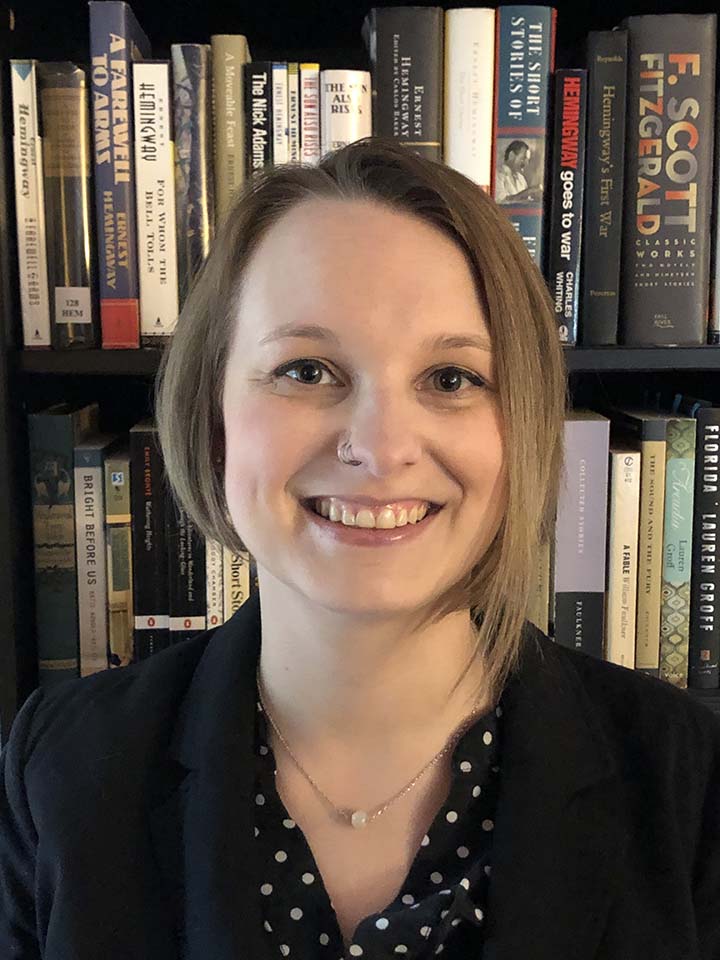
Alison Syring is an acquisitions editor at the University of Illinois Press. She has degrees in English literature and history from the University of Maryland, an MA in writing from Johns Hopkins University, and an MFA in creative writing from the University of Illinois. She started in publishing as a production editor and worked for several years as a technical writer. Alison began as a Round the Press intern through the graduate English department, after which she was hired as a full-time assistant editor. She has been acquiring in history and religion since 2020. Alison continues to acquire and grow a flagship series—the Working Class in American History series; diversify our Mormon studies list and broaden into religious studies; and maintain our commitment to early-career scholars by starting an Outstanding Dissertation in Disability History prize published through our Disability Histories series.