
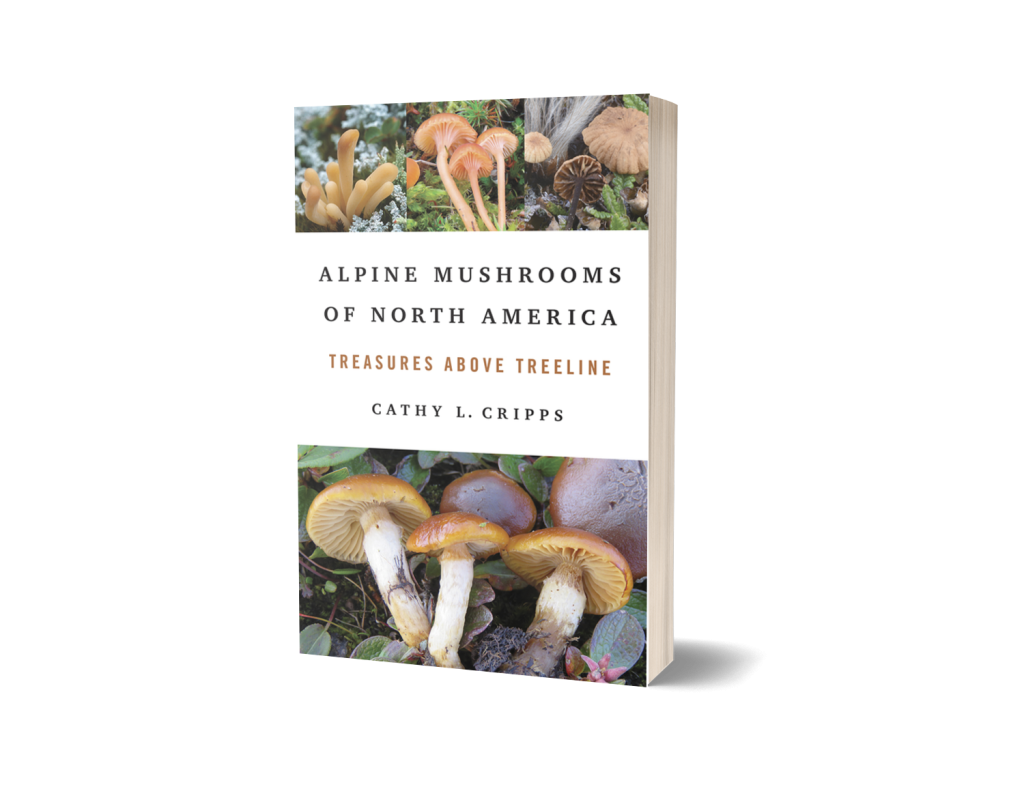
Cathy L. Cripps, author of Alpine Mushrooms of North America: Treasures above Treeline, answers questions about her new book.
Q: Why did you decide to write this book?
I have been studying alpine mushrooms for over 25 years, and a lot of my discoveries are buried in scientific papers which are not available to everyone. The idea of the book is to summarize these findings in one easily accessible format. A second goal is to promote awareness of these fungi for conservation purposes. As the climate warms and treeline moves up, their habitat is reduced. This book is a record of what is there now and provides baseline data for future changes or losses.
I tried to use an easily accessible format for naturalists by dividing the book into sections on mushrooms in meadows, on moss, or on willows. Color photos and easy-to-use keys help with identification of the alpine mushrooms. More experienced collectors will appreciate the genus list, DNA analysis, and references for a more detailed examination.
Q: What is the most interesting discovery you made while researching and writing your book?
In conjunction with colleagues and students, many of the mushrooms above treeline in North America are documented in popular literature for the first time. Over 80% of species will not be found in other books on North American mushrooms. Along the way, several new species were discovered which are included in the book. We have also documented perhaps the world’s highest morel mushroom at 12,000 ft. in Colorado.
Q: What myths do you hope your book will dispel or what do you hope your book will help readers unlearn?
A big myth is that the habitats above treeline are mostly devoid of life, and this includes mushrooms. Many people have told me that they hike in the alpine but have never seen a mushroom at these high altitudes. Well, you need to be there at the right time, looking in exactly the right place, and many of these mushrooms are tiny ‘belly mushrooms’—you need to get on your belly to see them! They are there!
It should be noted that alpine mushrooms are not of interest for edibility. They should be appreciated for their diversity and for conservation purposes.
The word ‘alpine’ technically means the open habitat above treeline. The word is often used in a wider sense, to mean ‘in the mountains’, which would include both the alpine and subalpine. Since I work in alpine habitats, I consider this second definition too broad, and imprecise in most contexts.
Q: Which part of the publishing process did you find the most interesting?
The number of people it takes to put together a book is interesting. This includes the main editor, the technical gurus, the production staff with technical readers, illustration experts, cover designers, and marketing whizzes.
Q: What is your advice to scholars/authors who want to take on a similar project?
If you have unique information that should be made accessible to the public, consider a book format. Make sure the product is as polished as possible before submitting, so fewer edits are necessary.
Q: What do you like to read/watch/or listen to for fun?
After retirement, my passion for fungi has not waned. Summer months are spent collecting fungi, and in winter months I spend hours using the microscope to record the cellular features (such as spores) of my dried collections. Mushrooms are still an endless source of fascination. We have only named a little more than 5% of the species!
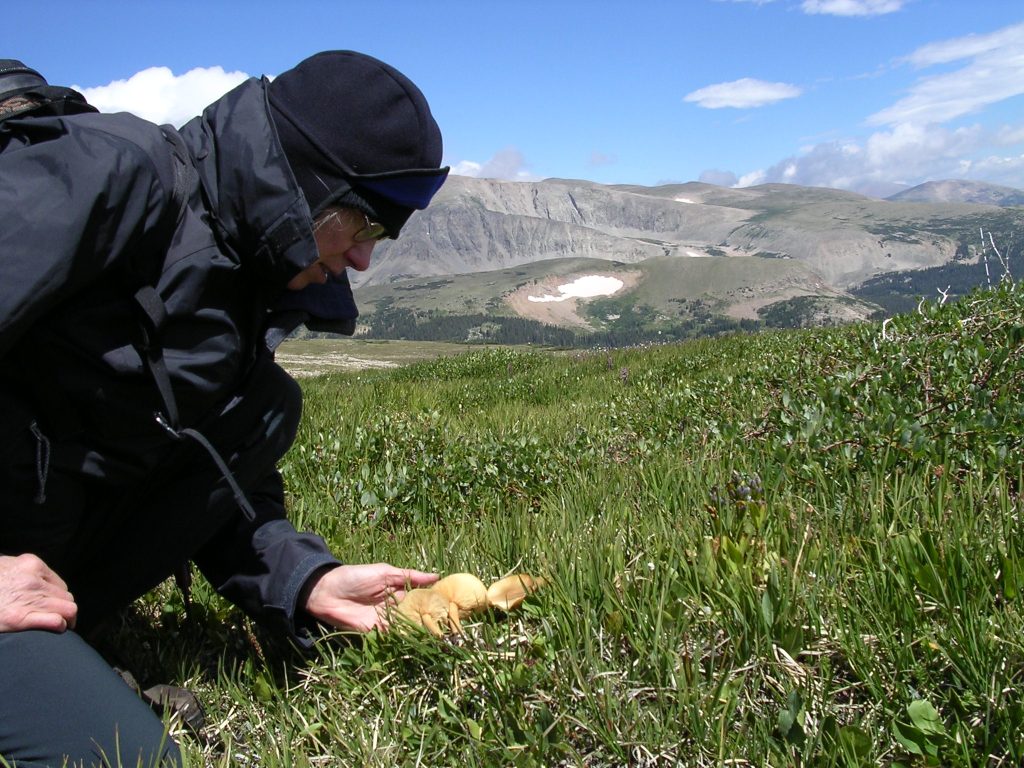
Cathy L. Cripps is an emeritus professor of mycology at Montana State University. She is the coauthor of The Essential Guide to Rocky Mountain Mushrooms by Habitat and the editor of Fungi in Forest Ecosystems: Systematics, Diversity, and Ecology.