
Brian Hallstoos, author of Sol Butler: An Olympian’s Odyssey through Jim Crow America, answers questions about his new book.
Q: Why did you decide to write this book?
Researching and writing this book made sense since Sol Butler graduated from the college where I teach. This meant that I had easy access to lots of archival materials and could bank on
sustained community interest and support. From the start, colleagues and sport historians encouraged me to write this book. It didn’t take much convincing since the deeper I dug the more interesting his story became; this pattern held true through the entire process.
Q: What is the most interesting discovery you made while researching and writing your book?
There were many interesting discoveries, including one that remains a mystery. Thanks to a Freedom of Information Act request filed by historian Matthew Guariglia, I learned about Black FBI agent Thomas Leon Jefferson, who identified Sol Butler in a report. This prompted me to file my own FOIA request. Archivist Thomas Haughton responded to my request, suggesting that based on the identifying numbers in Jefferson’s report that Butler was the “subject of or was interviewed as part of a World War Adjustment Compensation Act investigation.” The subsequently released materials did not provide answers. What did Butler – singled out in this 1920s FBI case from Chicago that Jefferson “had for a long time” – have to do with the bonuses that World War I vets received for their military service? Was he a victim or potential perpetrator of wrongdoing? Did he have knowledge regarding others’ malfeasance? Butler’s involvement intrigues me given his own military service, business success during this period, and his father’s yearslong fight for a Civil War pension.
Q: What myths do you hope your book will dispel or what do you hope your book will help readers unlearn?
Like other historians have made clear, post-World War II civil rights victories in sports – most famously Jackie Robinson’s integrating Major League Baseball – depended on the earlier heroic, sustained efforts of athletes and sport entrepreneurs like Butler. I hope that my book will help readers unlearn that significant, positive social change results solely from the actions of a few noble individuals, but rather is the product of collective action by many committed, brave people.
Q: Which part of the publishing process did you find the most interesting?
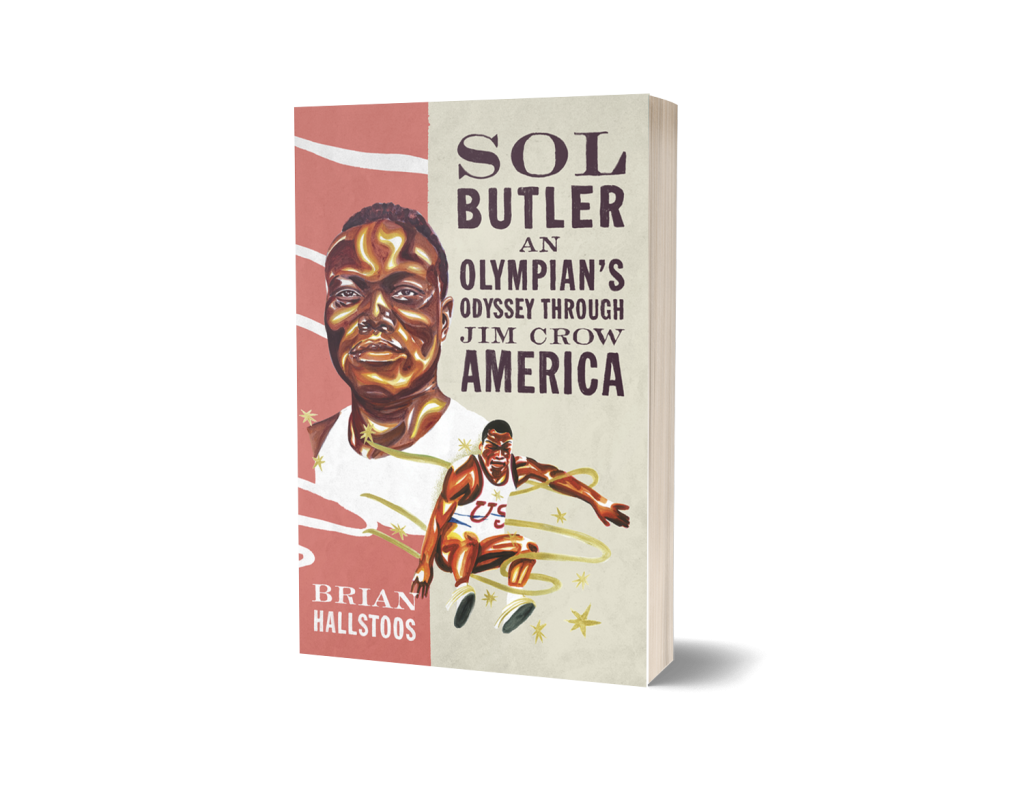
What I found most interesting had to do with the book’s visual appearance (testament to my art history and museum background). Seeing the book cover take form was tremendous fun, especially regarding the brilliant ways artists Jennifer Hoffman-Williamson and Khari Johnson-Ricks and designer Jason Gabbert responded to my suggestions and feedback. I also relished the transition from Word manuscript to polished page proofs. For years I had imagined what the book would look like – the font, chapter headings, placement of images – but the beauty of the proofs exceeded my imagination. Like the editors, the Press’s design team does amazing work.
Q: What is your advice to scholars/authors who want to take on a similar project?
Be creative with accessing hard-to-reach archives. For me, this often means relying on the kindness and generosity of librarians and archivists around the country to share what exists in their collections. Sometimes they will scan and mail relevant materials (it’s usually worth taking the time to write a thorough, quality letter or email and follow up with a phone call since this tends to increase their interest and desire to help). If possible, make your travels do double duty: schedule vacations or attend conferences in places where you want to conduct research. This all works better if you have the luxury of taking your time.
Q: What do you like to read/watch/or listen to for fun?
For reading fun, it’s not so much what as how I read. I like having multiple books going at once, shifting from one to the other as the spirit moves me. Right now, I’m bouncing between Stalin: Passage to Revolution (Ronald Grigor Suny), Black Fire: The Making of an American Revolutionary (Nelson Peery) and Driving with Dead People (Monica Holloway). In terms of watching, please give me a movie theater (preferably empty) and more films like the recently viewed Navalny, Becoming Led Zeppelin, Beasts of the Southern Wild, A Real Pain, Exhibiting Forgiveness, and The Brutalist. Regarding music, my ears still ring from the 1980s/90s Twin Cities sounds of Prince, Husker Du, Babes in Toyland, Trip Shakespeare, The Magnolias, Lipps Inc., Willie Wisely, Mint Condition, The Replacements, Soul Asylum… and now I’ll take anything that gets me singing or dancing (love polyrhythms and harmonizing).

Brian Hallstoos is a professor at the University of Dubuque.