

Join UIP in welcoming Caroline Kline and Margaret Olsen Hemming, new editors of Dialogue: A Journal of Mormon Thought! Their first issue as editors, Volume 59, Issue 1, is out now and is available open access online.
Caroline Kline is Assistant Director of the Center for Global Mormon Studies at Claremont Graduate University, where she also earned her Ph.D. in Religion. Her areas of interest include contemporary Mormon women’s communities and global Mormonism. Kline is the director of the Claremont Mormon Women Oral History Project and the Claremont Global Mormon Oral History Project. She is author of Mormon Women at the Crossroads: Global Narratives and the Power of Connectedness (published by the University of Illinois Press!), the co-editor of Mormon Women Have their Say: Essays from the Claremont Oral History Project, and has written many articles and book chapters.
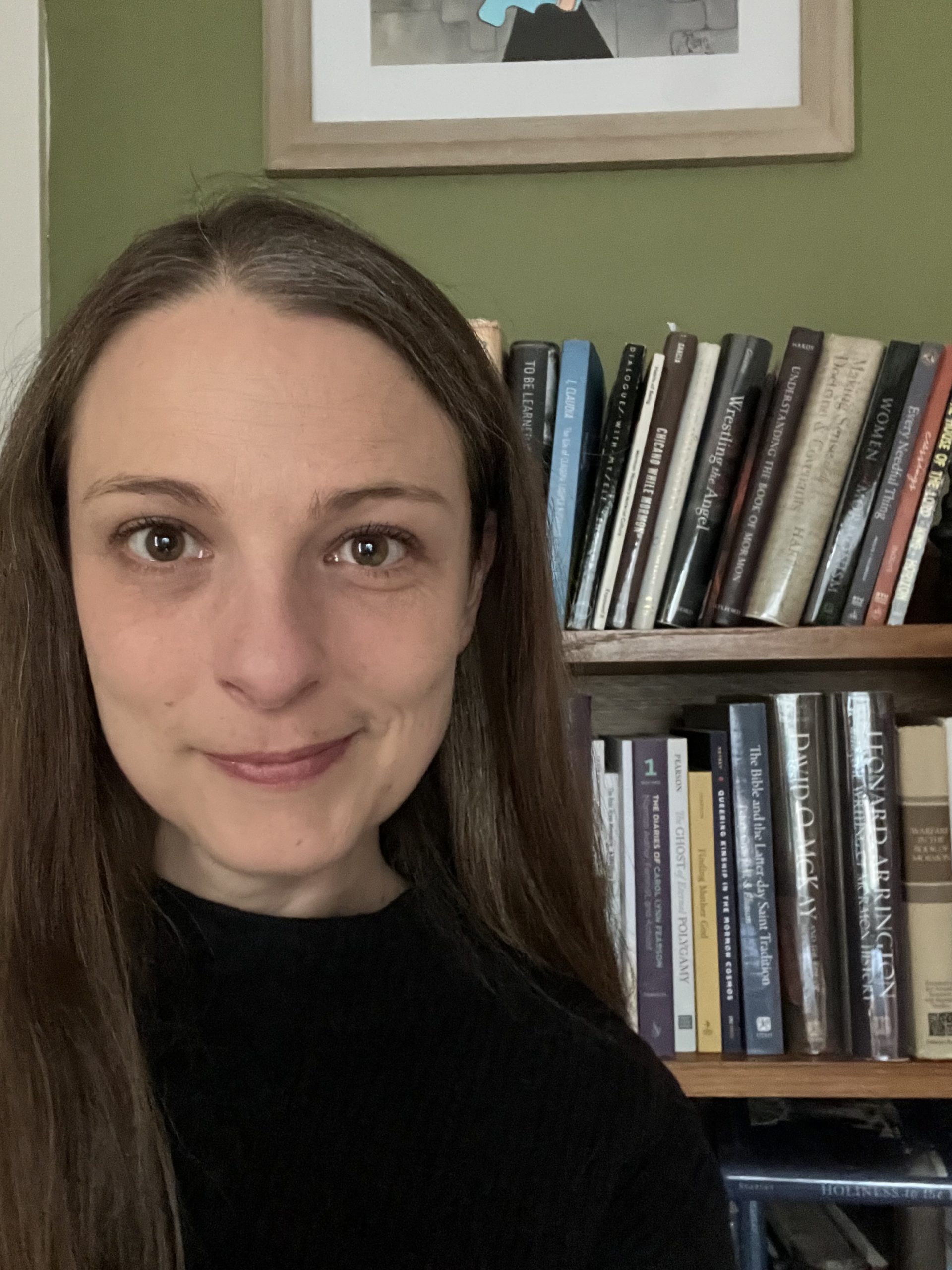
Margaret Olsen Hemming previously served as the Art Editor for Dialogue. She is also the former editor-in-chief of Exponent II and the coauthor of The Book of Mormon for the Least of These. She is on the advisory board for the Center for Latter-day Saint Arts and curated the exhibit The Sacred Feminine in LDS Art & Theology for the Center Gallery last year. Hemming earned a Master’s degree in International Peace and Conflict Resolution from American University. She has had many publications appear in Dialogue, including “Where Are We Standing?,” “‘They Have Received Many Wounds’: Applying a Trauma-Informed Lens to The Book of Mormon” (co-authored with HB Franchino-Olsen), “Abstraction in Latter-day Saint Art: An Interview with Chase Westfall,” “The Book of Mormon Art Catalog: An Interview with Director Jennifer Champoux,” “The Divine Feminine in Mormon Art,” “Times and Seasons,” “Mormon Women Claiming Power,” and “Wrestling with the Racism of the Book of Mormon.”
Q: Have you two worked together before, or is this a new collaboration? What excites you about working as a team?
CK: Margaret and I have not worked closely together before, but we have known each other for the last fifteen years or so through our association with Exponent II, a Mormon feminist organization and publication. I’ve known of and admired Margaret’s work for many years. Over her years as editor, I saw her guide Exponent II with vision and excellence. I’m excited to work with Margaret because she is collaborative, skilled, and wise. Moreover, she is a deeply principled person. When the search for a new editor of Dialogue began, I knew that I would only consider applying if Margaret would do this with me.
MOH: Since the first time I met Caroline, I was impressed with her bravery and her work ethic. She seemed to always have a project going and it was always interesting. Her questions and comments are always sharp and insightful, so that when she speaks up you know whatever she says will be worth hearing. As we became better friends over the years, I knew that if I ever had the chance to work with her, I would grab it.
Q: What are you most looking forward to in your role as editor of Dialogue?
MOH: One of the things I care about most is the editorial process itself: helping an argument sharpen or clarifying what’s really at stake in a piece. The journal not just as a venue for finished scholarship, but as a place where strong work becomes stronger through careful stewardship.
I’m also eager to cultivate interdisciplinary work in concrete ways—pairing essays in the same issue that approach a shared question from different angles, inviting scholars to write slightly beyond their disciplinary comfort zones, and making room for work that blends theology, history, science, sociology, literature, and the arts. I love it when someone from a different field approaches a topic in a way I never would have considered before. Dialogue is so broad in its interests that it attracts people asking and answering questions in totally surprising ways.
CK: I’m most looking forward to helping steward one of the few spaces in Mormonism where rigorous scholarship, personal narrative, the arts, and theological imagination come together in expansive conversation. Dialogue has been such an important forum for exploring complexity and wrestling seriously with urgent questions about race, gender, sexuality, authority, and belonging within the tradition. I’m excited to help cultivate a space where new voices, new ideas, and new possibilities within Mormonism can emerge and be taken seriously.
Q: Do you have a particular vision or direction you hope to bring to the journal?
CK: As Mormonism continues to grow globally, I’m interested in how Dialogue can more fully reflect the realities of a worldwide church. That includes publishing more work by scholars and writers outside the United States and attending more carefully to the theological and cultural questions emerging in global contexts. Mormon thought will increasingly be shaped by voices beyond its historic American center, and the journal can help make space for that shift.
I’m also interested in encouraging work that is not only analytical but constructive—essays and creative pieces that help imagine what Mormon theology and community might yet become. At a time when many people are renegotiating their relationship to the tradition, I hope Dialogue can remain a place where serious scholarship and theological creativity help shape the future.
Finally, I’m excited to expand Dialogue’s engagement with the arts. With the move to printing in color, we’ll be able to feature visual art more fully and thoughtfully, and we hope to publish more essays and articles that take art seriously as a site of theological and cultural reflection.
MOH: I hope to continue Dialogue’s long commitment to intellectual independence while widening the table even further. Mormon studies has grown enormously in recent decades, and I want the journal to remain a place where that growth is visible, not only in traditional academic scholarship, but in interdisciplinary work, public-facing essays, and creative expression.
My own work has been shaped by trauma-informed reading, feminist and liberation theology, and a conviction that the stories we tell about God and community matter deeply. I would love to see Dialogue continue to foreground voices that have been marginalized or disciplined into silence, while also modeling thoughtful, charitable engagement across difference.
I also have a background in Mormon art and I’m excited to see Dialogue embrace art in new ways. Caroline and I are thrilled that Dialogue will begin publishing in color! Mormon art as a serious field of study is getting much more attention and we want Dialogue to be a place where art and artists are recognized, discussed, and analyzed as a serious part of Mormon studies.
Outgoing Editor: Taylor Petrey
Taylor Petrey has served as Editor in Chief of Dialogue since 2019. He is a Professor of Religion at Kalamazoo College and earned his Master of Theological Studies and Doctor of Theology at Harvard Divinity School. He has authored many books, including Queering Kinship in the Mormon Cosmos, Resurrecting Parts: Early Christians on Desire, Reproduction, and Sexual Difference, and Tabernacles of Clay: Sexuality and Gender in Modern Mormonism, and he is co-editor of Re-Making the World: Christianity and Categories: Essays in Honor of Karen L. King, The Bible and the Latter-Day Saint Tradition, and The Routledge Handbook of Mormonism and Gender.
From all of us at University of Illinois Press, thank you to Taylor for his amazing work on Dialogue!
Find Out More
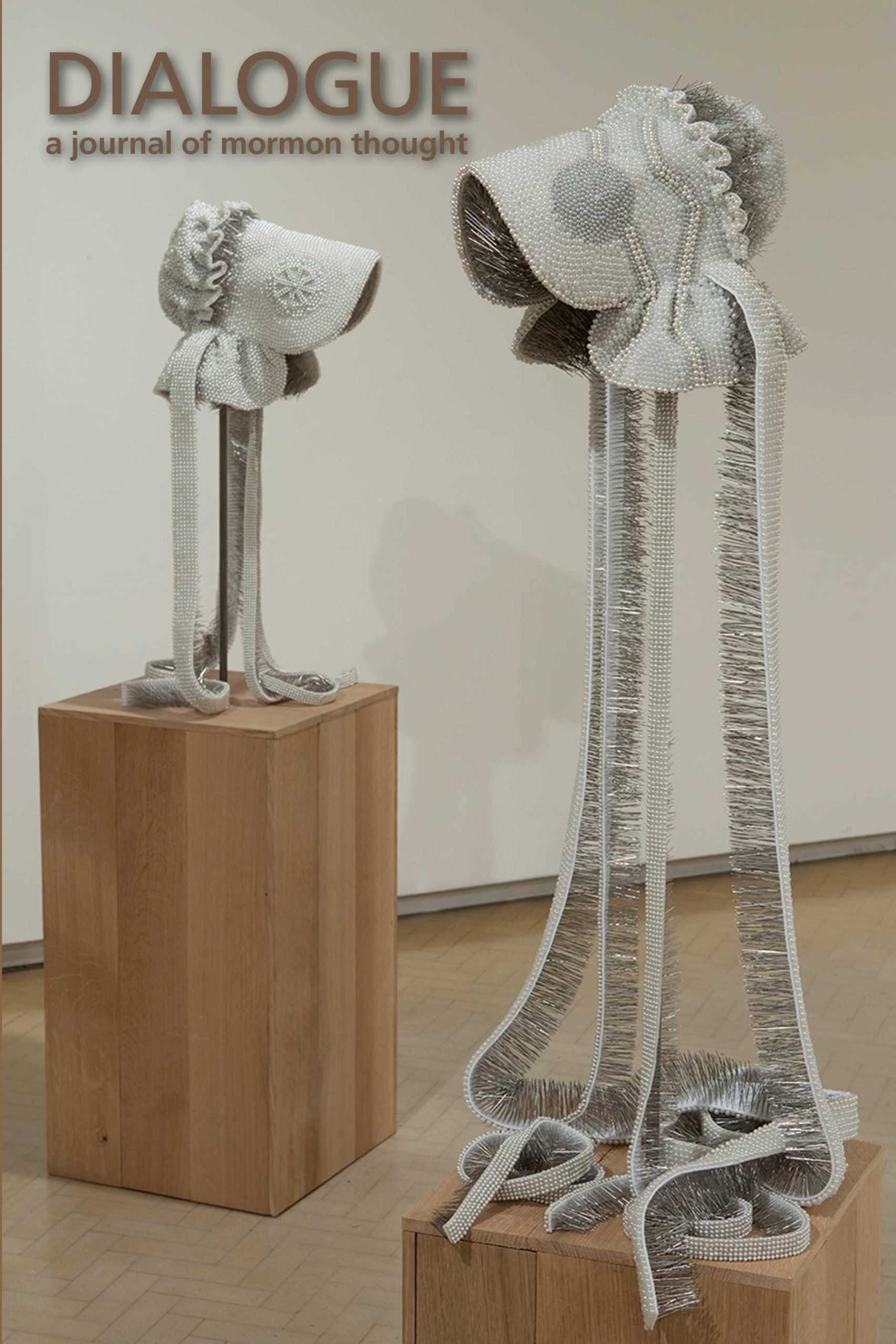
Dialogue: A Journal of Mormon Thought is an independent quarterly established to express Mormon culture and to examine the relevance of religion to secular life. It is published by the Dialogue Foundation and edited by Latter-day Saints who wish to bring their faith into dialogue with the larger stream of world religious thought and with human experience as a whole and to foster artistic and scholarly achievement based on their cultural heritage. The journal encourages a variety of viewpoints; although every effort is made to ensure accurate scholarship and responsible judgment, the views expressed are those of the individual authors and are not necessarily those of The Church of Jesus Christ of Latter-day Saints or of the editors.
- To recommend this title to your library, fill out this Library Request Form.
- Ready to see your work featured in Dialogue? Submit original scholarly work here.
- Check out our blog post to learn more about Mormon Studies at University of Illinois Press.