
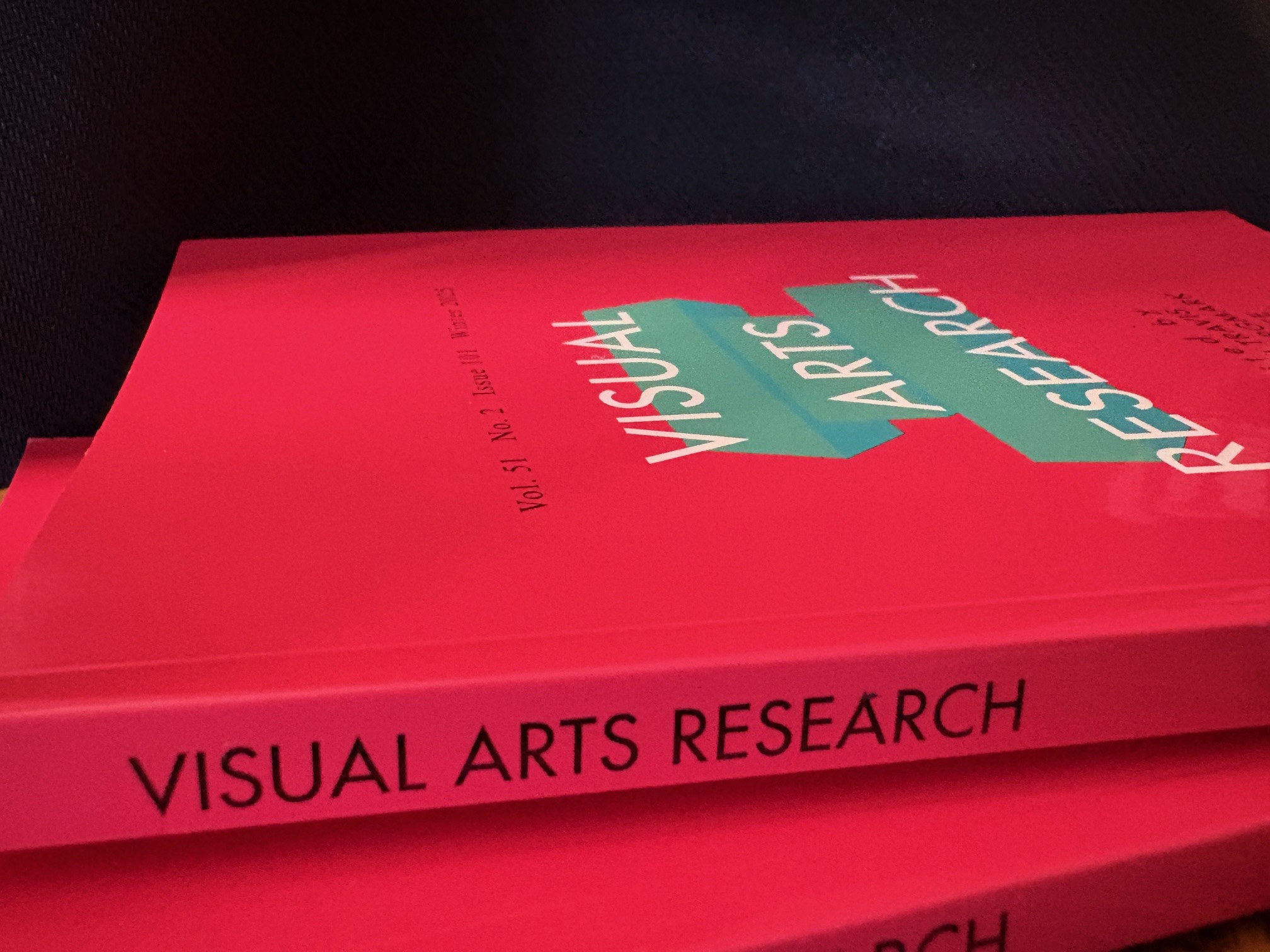
Visual Arts Research Volume 51, Number 2, is the second of a two-issue special open access volume, and with it, we welcome two new editors to the VAR editorial team. Current editor Sarah Travis is joined by incoming editors Jennifer Bergmark and Merel Visse.
Meet the Co-Editors
Dr. Sarah Travis is Assistant Professor of Art Education and the Chair of the Art Education Program at University of Illinois School of Art & Design. She earned her Ph.D. in Art Education at the University of North Texas. She began her role as editor of Visual Arts Research with Volume 47, Issue 1, published in 2021, and is joined by two new co-editors, introduced below, beginning with Volume 51, Issue 2. A notable contribution to the journal is her 2020 article, “Portrait of a Methodology: Portraiture as Critical Arts-Based Research,” an invited paper for the 2019 Eisner Doctoral Research Award in Art Education from the National Art Education Association. In addition to numerous publications in journals such as Art Education and International Journal of Education and the Arts, she is co-editor of the books Pedagogies in the Flesh: Case Studies on the Embodiment of Sociocultural Differences in Education and Experiments in Art Research: How Do We Live Questions Through Art?
Q: What has been the most rewarding aspect of serving as editor for the past five years?
ST: One of the most rewarding aspects of serving as an editor for Visual Arts Research has been working with guest editors on special issues on a range of experimental topics as we support emerging authors as they pursue publication.
Q: What makes a submission stand out to you, and what advice would you give to prospective contributors?
ST: What makes a submission stand out to me is when the author(s) are expressing something of themselves through sincere inquiry in a way that is traversing an experimental path. So, my advice for prospective contributors to Visual Arts Research is to investigate creative, collaborative, and critical ways to express the personal within your research because in doing so, you are opening possibilities for scholarly publication to become a connective space that documents inquiry that resonates widely.
Dr. Jennifer Bergmark in Assistant Professor of Art Education at University of Illinois School of Art & Design. She earned her Ph.D. in Art Education from the University of Illinois Urbana-Champaign. Her first issue of Visual Arts Research as editor was Volume 51, Issue 2. Dr. Bergmark’s research focuses on community-based art education, arts integration, advocacy, and curriculum development, emphasizing culturally sustaining and socially engaged practices that foster sustainability, inclusion, and creative learning across diverse contexts.
Q: What are your main goals for the journal in the coming years?
JB: In a recent VAR editorial meeting, we looked at early publications, and I noticed graduate student manuscripts with a scholar’s responses. This reinforced my belief that Visual Arts Research is a place for experimentation, supporting young scholars, and facilitating dialogue to reflect a growing and changing field. VAR has adopted a rotation of thematic and open issues, and this provides multiple entry points to engage with contemporary practices and concerns within the field. At a time when schools are under increasing pressure and criticism, I would like to see more collaborations between art education scholars and teachers in the field. It is my hope that VAR can bring teachers in the field, community arts practitioners, and higher education scholars into conversation with one another to envision new possibilities for collaboration and research.
Q: As you begin your editorial tenure, what kinds of manuscripts or research methodologies do you most hope to see submitted?
JB: Art is vital for representing diversity and cultivating joy as acts of resistance, and there are many contemporary artists and community engaged practitioners that reflect how art is actually learned and lived. I would like to see more research that centers community-based arts, recognizes contemporary artists as collaborators and knowledge producers, and values culturally embedded and grassroots forms of art education. I also recognize that research must also directly address contemporary life and concerns including artificial intelligence, digital culture, social inequity, climate crisis, and shifting forms of creative labor as integral to artistic learning. I hope to see art education continue to expand research to broaden what counts as knowledge in the field while strengthening its relevance, responsiveness, and capacity to engage with the complexities of the present.
Dr. Merel Visse is a scholar, artistic researcher, and editor. She currently serves as Associate Professor and Director of Medical & Health Humanities at Drew University’s Caspersen School of Graduate Studies. She earned her Ph.D. from Vrije Universiteit Amsterdam (VU Amsterdam). Her first issue of Visual Arts Research as editor was Volume 51, Issue 2. Dr. Visse’s research explores how artistic practice and research intersect with apophatic thought and ethics to connect with ineffable human experiences. Her apophatic approach to creative critique is called “Thresholding” and engages artistic inquiry into care through creative, cross-disciplinary practices.
Q: What are you most looking forward to about being a co-editor of VAR?
MV: I’m most looking forward to supporting emerging artists and researchers in making a difference through getting published. I’m excited about experimental spaces—both virtual and in-person—where authors can connect and exchange ideas and practices that crosses disciplines. I feel privileged to work with amazing colleagues, and part of the Urbana-Champaign inspiring culture, scholarship, and professional practice.
Q: Where do you see the journal in the next couple of years? Are there particular topics you think will become more prevalent?
MV: I envision the journal building even stronger international conversations with artistic research practices in Europe, Asia, the Global South and other areas, fostering a truly global dialogue. I also see opportunities for philosophical reflections on how visual artists contribute to theory-making becoming increasingly central to our work—exploring the unique ways artistic practice and research generate knowledge as a form of “lived understanding,” relevant to science and humanities disciplines, especially in this time of “flattening.”
Outgoing Editor
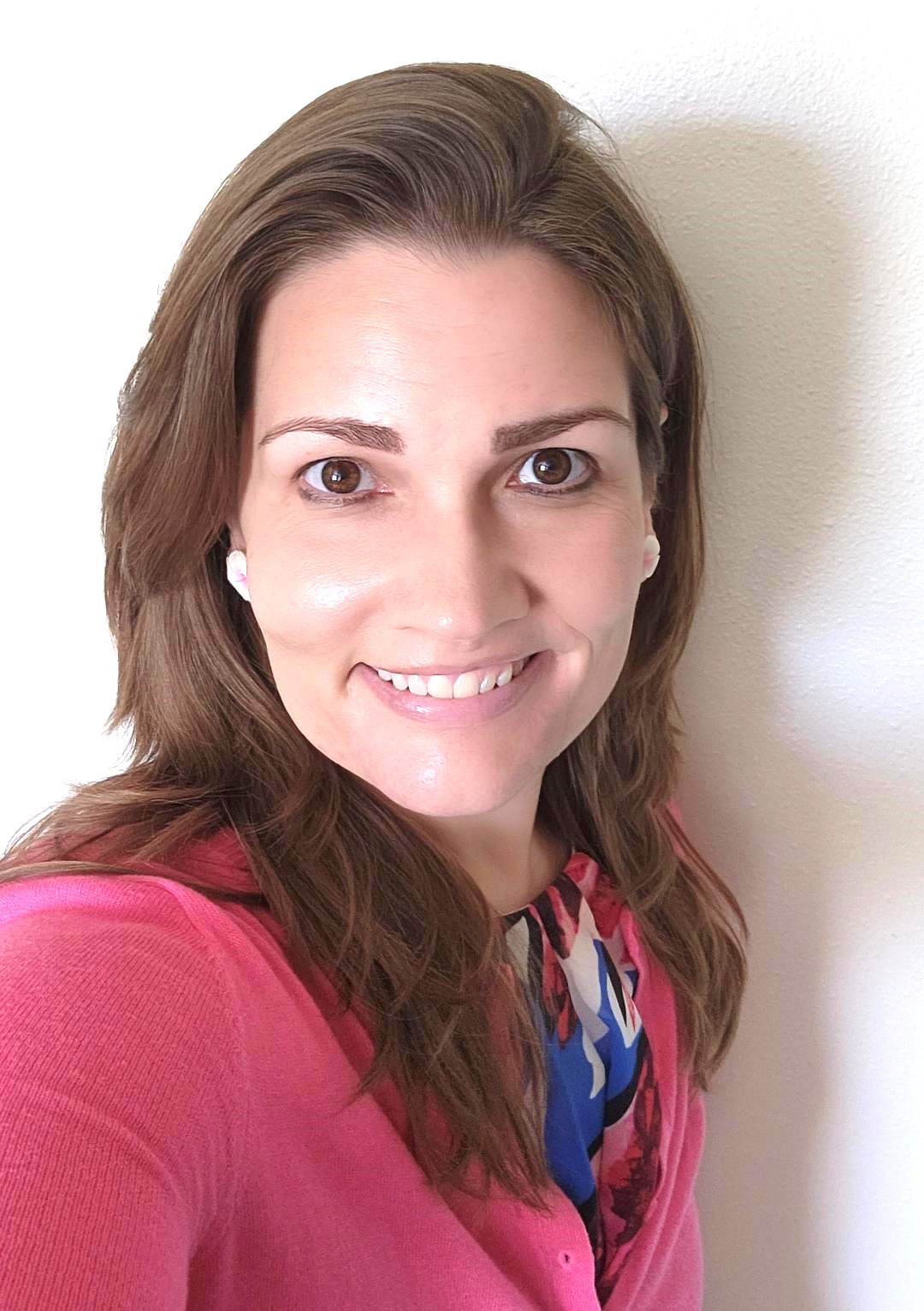
Dr. Laura Hetrick is Associate Professor of Art Education and the Art Education Graduate Coordinator in the School of Art & Design at the University of Illinois and an affiliate of the Beckman Institute for Advanced Science and Technology, the Carl R. Woese Institute for Genomic Biology, and the Center for Social and Behavioral Science. She earned her Ph.D. in Art Education from The Ohio State University. She began her time as editor of Visual Arts Research in 2014 with Volume 40, Issue 2, covering 22 issues until completing her editorship with Volume 51, Issue1, earlier this year. Her recent notable contributions to the journal include “Black on Black on Black on Black: An interview with Artist-Scholar Dr. Blair Ebony Smith,” “Current State of Play: Transitions,” and “Recognizing Greatness in our own Time.” Additionally, Dr. Hetrick has edited the book Teaching Art, (Re)Imagining Identity, part of the Common Threads series, has published more than 30 peer-revied articles, and has given more than 80 conference presentations and invited lecturers. We thank her for her time in shaping the direction of Visual Arts Research.
Special Open Access Issues
The first piece of a two-part project, this special issue of Visual Arts Research explores radical conceptions of research and publication practices in art + design education. A roster of first-time authors, early career and emerging scholars, and classroom teachers (among others) from outside of higher education explore the nuances and possibilities that spring forth when we imagine the world, life, and social institutions not as they are but as they might be.
The articles emerge from a pairing of veteran authors with the contributors in peer-to-peer mentorship exchanges and investigate histories of radical forms of publication and counter-culture publication; radical approaches to research and publication in the arts and education; teaching about/with radical or subversive publishing practices; collaborative and community engaged co-research or co-publication; profiles of artists/educators reimagining spaces of research and/or publication; radical imagination addressing issues of access in scholarly publication; and visions for the future of research and publication in the arts + design education.
A vivid form of imaginative scholarship, artful writing pushes the boundaries of publishing scholarly articles. The second of a two-part special issue of Visual Arts Research further examines scholarship that re-imagines ways for dialogue and storytelling to frame the nature of research.
In addition to text, the contributors include visual elements, an unconventional but dynamic element that uses the interplay of images and words to further advance their ideas and promote more layered and nuanced understanding. The articles provide examples of merging visual and experimental text; the radical potential of storytelling through grounded, evocative narratives; centering insurgent practices from a shared viewpoint; and rethinking educational norms by critiquing hierarchical structures. As the authors show, narratives pave the way to a deeper dialogue that engages the reader’s imagination, but also enhances awareness of their own biases, cultural assumptions, and other aspects of qualitative awareness.
Find Out More
Visual Arts Research (VAR) provides a forum for historical, critical, cultural, psychological, educational, and conceptual research in visual arts and aesthetic education. Unusual in its length and breadth, VAR typically publishes 9 –12 scholarly papers per issue and remains committed to its original mission to provide a venue for both longstanding research questions and traditions alongside emerging interests and methodologies.
- Individual subscriptions can be made through the University of Illinois Press website.
- To recommend this title to your library, fill out this Library Request Form.
- Ready to see your work featured in Visual Arts Research? Submit original scholarly work here.
For more special issues, check out our 2019–2023 recap blog post.