
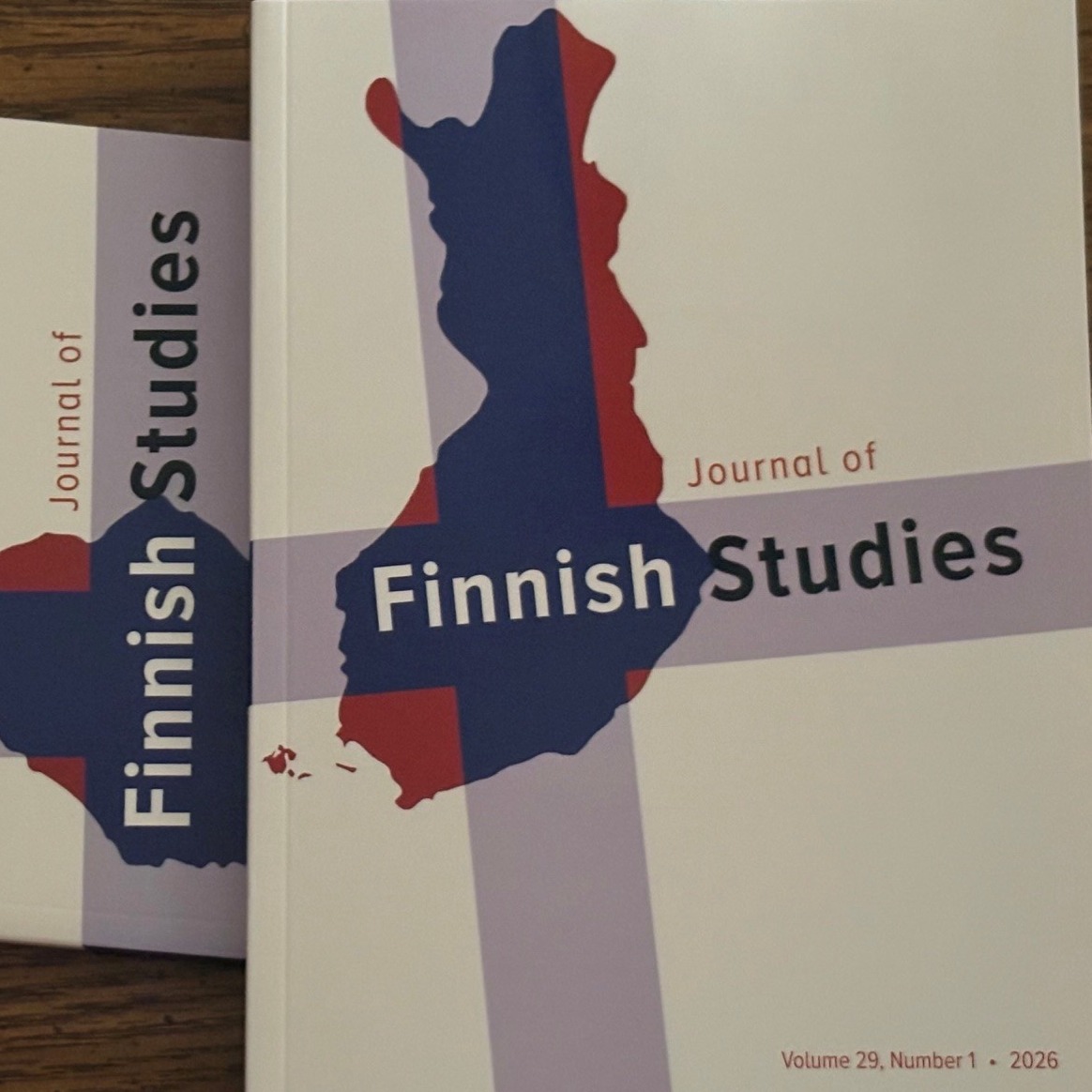
If you’ve been thinking of submitting to the Journal of Finnish Studies, now is the perfect time. From September to November 2026, you can read four articles in the journal for FREE to give you an idea of the style and quality of articles presented in the journal.
About the Journal of Finnish Studies
The Journal of Finnish Studies, founded in 1997, is an international, scholarly, interdisciplinary journal that brings research about Finnish topics to an English-language audience. The Journal aims to foster a deeper understanding of the rich cultural, historical, social and political heritage of the lands and people that make up the Republic of Finland today, along with Finland’s global impact and relations with other parts of the world, including the wider Nordic region and North America. Readers and authors of the Journal are members of diverse fields such as history, anthropology, folklore, literature, linguistics, political science, sociology, business, and more. Each article brings its own discipline-specific methodologies and theories and is refereed by scholars who are specialists in that discipline, thereby enriching the journal’s coverage.
Free to Read until October 31, 2026!
Karelian is a small Finnic language, the closest cognate of Finnish, spoken in Finland and Russia. This article describes the present situation of Karelian in Finland, its revitalization, and the experiences and motivations of Karelians reclaiming the language.
This article presents an overview of the Russian language in Finland from historical and social perspectives. The role of the Russian language in Finland has varied over time, as have attitudes toward it, making a historical perspective essential.
In this article, the authors report on the findings of a survey focused on people with dementia and their family members, concentrating on everyday problems, well-being, and realization of rights of people with dementia (N?=?206) conducted in 2023. In a society where a growing number of people are aging without children of their own, innovative and sustainable solutions are needed to provide support in accessing suitable social and health care services.
The wedding celebration between Ilmarinen and Pohjan tytär (Daughter of the North) occupies a central position in all editions of the Kalevala. This article argues that it was precisely the wedding song material and the very idea of the wedding that not only enabled the creation of the epic but also significantly influenced Lönnrot’s imaginative contributions, as evident in his editorial decisions from the earliest stages.
Looking to read further? If you’re not yet a subscriber, you can sign up here, or recommend this journal to your local/institutional library.
Submit Your Work
The Journal welcomes research articles that delve into Finnish culture, history, politics, economy, education, arts, literature, linguistics, folklore, migration, and related subjects. Topics related to Finnish migration to and from North America are welcomed. Discussion of Finnish, Swedish, and Sámi topics are expected to make use of and contribute to scholarship in those languages. Quotations appear in the source’s original language as well as in English translation. The Journal also publishes book reviews of titles relevant to the field of Finnish studies, including works published in Finland.