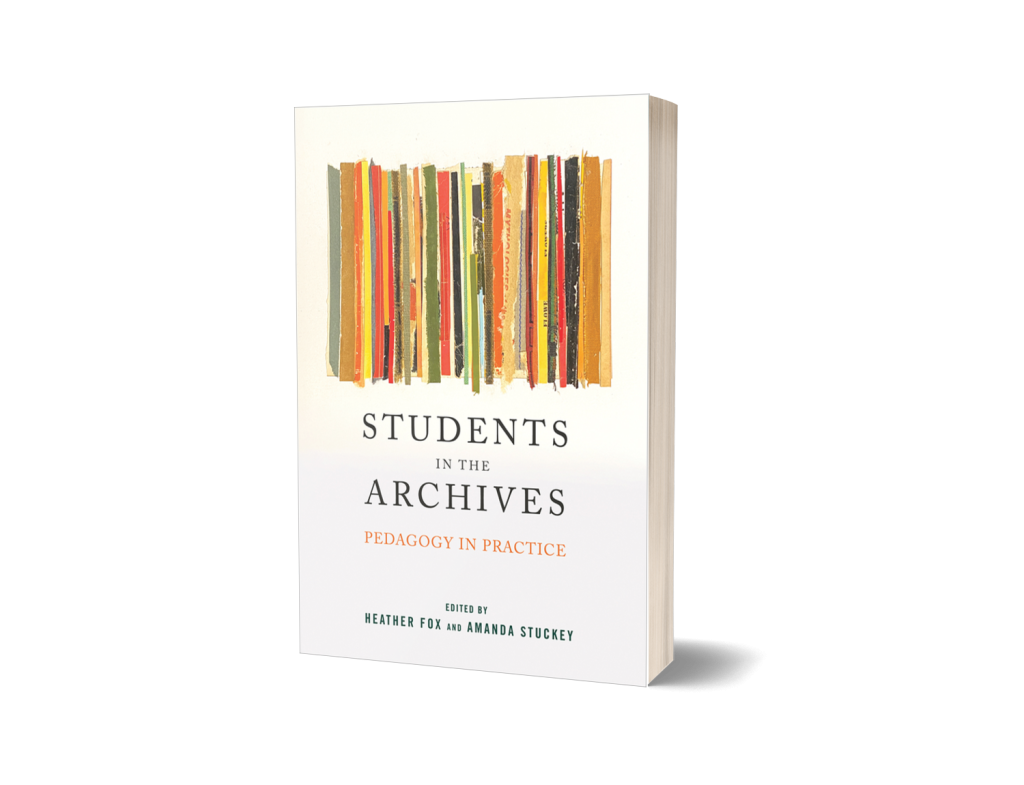
Heather Fox, co-editor with Amanda Stuckey of Students in the Archives: Pedagogy in Practice, answers questions about their new book.
Q: Why did you decide to write this book?
Co-editor Amanda and I first met during a collaborative project for ESQ Journal of the American Renaissance during graduate school. A few years later, we reconnected at the Study for the Society of American Women Writers (SSAWW) Conference and discussed our archival research projects over coffee. We observed that archival sources and research methodologies were rarely integrated in our teaching, even though we also recognized the high-impact outcomes of working with archives. To address the initial absence of archives-based work in our teaching, we organized conference presentations, collaborative teaching ventures, a co-authored publication, and a small digital humanities project. Conference presentations at SSAWW, C19: The Society of Nineteenth-Century Americanists, and the Modern Language Association; a publication in The New Americanist (2020) about our undergraduate archival recovery project that connected students at two universities located 1,000 miles apart; and an accessible digital space called Students in the Archives: A Pedagogy-Driven Digital Humanities Project that features scholar-educators’ work across disciplines all demonstrated the capacity of archives to connect research and teaching. Despite these efforts, we lamented the resources and incentivization challenges facing small-scale digital humanities initiatives, which prompted us to consider a hybrid approach to sharing archival teaching stories. We conceptualized a project that fulfilled academe’s preference for traditionally produced scholarship, but we also wanted to provide a digitally accessible environment for sharing ideas and materials. Witnessing the power of these projects to bridge interdisciplinary expertise and to provide authentic research experiences for students, we recognized that an edited collection with digital supplement–one that provided digital lesson plans, assignments, and other teaching materials for readers–was a clear next step. We took our first step toward this project in January 2023, when we shared a call for papers with a few professional organizations to gauge interest in this type of edited collection. By mid-March, we received 42 (more than double the anticipated) proposals from both established and emerging scholars across the U.S. and internationally. As an edited collection with accessible resources that extend archival pedagogy beyond the print pages, Students in the Archives: Pedagogy in Practice fills the gap we noticed between teaching and archival research with interdisciplinary perspectives and diverse intersections between archival research and teaching.
Q: What is the most interesting discovery you made while researching and writing your book?
While we recognized this from our own teaching experiences, we were pleased to discover that the role of student inquiry often drives archival research experiences in other educators’ classrooms. One of the unique aspects of this book is its focus on types of collaborations, as exemplified by the number of co-authors who were students at the time of the chapter’s initial development.
Q: What myths do you hope your book will dispel or what do you hope your book will help readers unlearn?
In higher education, there is often a disparity of resources, which can lead to the thinking that a new or different teaching initiative would not work at a particular institution. Several of the contributors to the book discuss resource limitations and how, despite them, they integrate archival research experiences into institutions serving underrepresented, underserved demographics. For instance, some contributors talk about how they incorporate on site archival artifacts and collections that connect with their campus or how digitized collections provide opportunities for student research.
Q: Which part of the publishing process did you find the most interesting?
Different from my experience with publishing my first book, Amanda and I decided to reach out to publishers to gauge interest for the project early in the process. I also met with a colleague from another institution about her experiences with edited collections, since neither of us had previous experience working with multiple authors on a volume. It was interesting to learn from different acquisitions editors about their press’s initiatives, which sometimes aligned with information on the press’s website and sometimes differed a bit from it. For us and this book, we know that we wanted to publish with UIP from our first meeting with Alison Syring. We were also grateful for Alison’s guidance throughout the process.
Q: What is your advice to scholars/authors who want to take on a similar project?
This is my first time co-editing a collection. We have remained organized throughout the project, but with 20 chapters and 42 authors, the process can become unwieldy. My advice is to work with an editor like my co-editor (Amanda Stuckey) and to use soft deadlines to ensure that the volume remains on its production timeline.
Q: What do you like to read/watch/or listen to for fun?
I enjoy reading historical fiction—a pastime that primarily occurs during the summer months due to work-related reading during the academic year. I regularly watch British murder mysteries and crime fiction on BritBox, as well as cooking programs, to decompress. I listen to a variety of music across genres. My favorite podcast is Julia Louis-Dreyfus’s Wiser than Me.
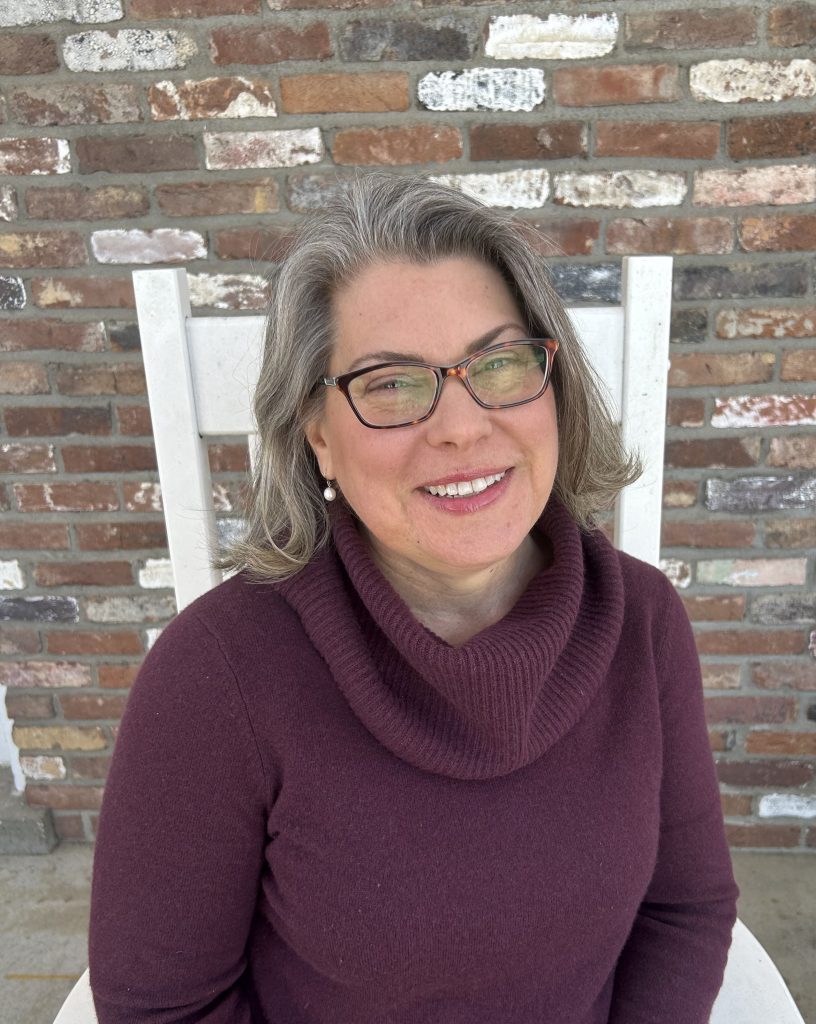
Heather Fox is an associate professor of English at Eastern Kentucky University. She is the author of Arranging Stories: Framing Social Commentary in Short Story Collections by Southern Women Writers.