
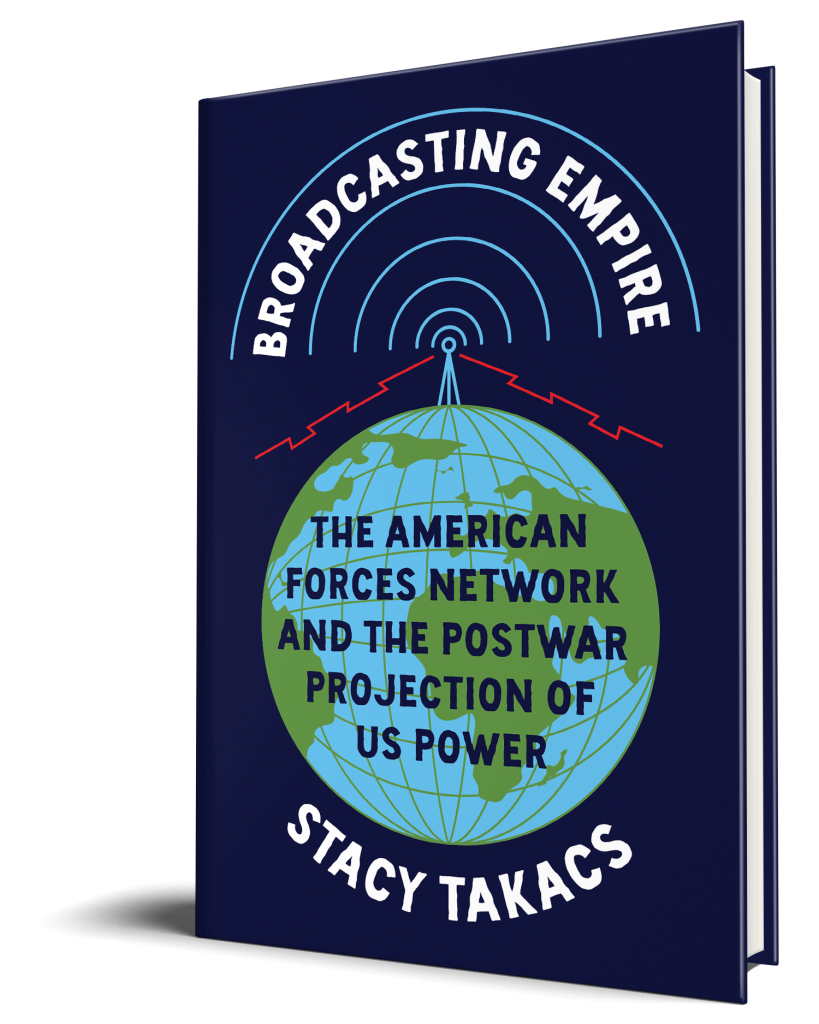
Stacy Takacs, author of Broadcasting Empire: The American Forces Network and the Postwar Projection of US Power, answers questions about her new book.
Q: Why did you decide to write this book?
I wrote a dissertation about television and empire at the end of the Cold War, specifically the Pax Americana that emerged from the dust of that conflict. While researching that project, I ran across information about the military radio and TV network AFN, but I did not have the time or support to pursue the project. I always found it fascinating, though, and returned to it later to see what I could uncover. Thankfully, AFN was eager to have their story told, which made the project suddenly viable. Their assistance was invaluable.
Q: What is the most interesting discovery you made while researching and writing your book?
I was most fascinated by the scope of the network’s influence, and enjoyed meeting civilians from all over the world—Panama, the Philippines, Japan, South Korea, Germany, Austria—who grew up listening to the service.
Q: What myths do you hope your book will dispel or what do you hope your book will help readers unlearn?
I hope it will illustrate the complex negotiations that structure US basing operations. There is a tendency to think the US just imposes itself and does what it wants, and to a certain extent that is true, but as a global hegemon who did not want to be perceived as a conqueror, the US is generally careful to work out tit-for-tat arrangements with locals and will try, as far as possible, not to upset them. In terms of radio and TV transmissions, this often meant circumscribing broadcast signals and censoring information and entertainment programming that might offend locals. The Navy Broadcasting Service (later folded into AFN) coined the phrase “controlled power radiation” to describe some of these appeasement measures, and I think that’s an apt metaphor for how US basing works. It is a power relationship, but not an unconstrained one.
Q: What is your advice to scholars/authors who want to take on a similar project?
Seek DoD approval for your project before you start. I never did, and AFN agreed to work with me despite this, likely because they are all consummate PR professionals who know that refusal could raise suspicions. There were several times in the process of conducting interviews when I could not get access for lack of official clearance, however. Thankfully, I don’t think they saw me or my project as a threat. Who cares about a little old radio and TV operation designed for distraction? I hope I’ve made the case that AFN is much more than this, but even those who work for AFN don’t quite understand the history of the service and don’t necessarily see it as worthy of serious study.
Q: What do you like to read/watch/or listen to for fun?
I try to stay up on current TV programs. I just blasted through Pluribus, for example. I am also a fan of gentle comedies (Abbot Elementary, Ted Lasso, Nobody Wants This, and anything Mike Schur does) and British reality contests like Great British Baking Show or the Great Pottery Throwdown. Comfort TV, basically. Perhaps because my research focuses so heavily on politically sensitive topics, I seek soothing TV.
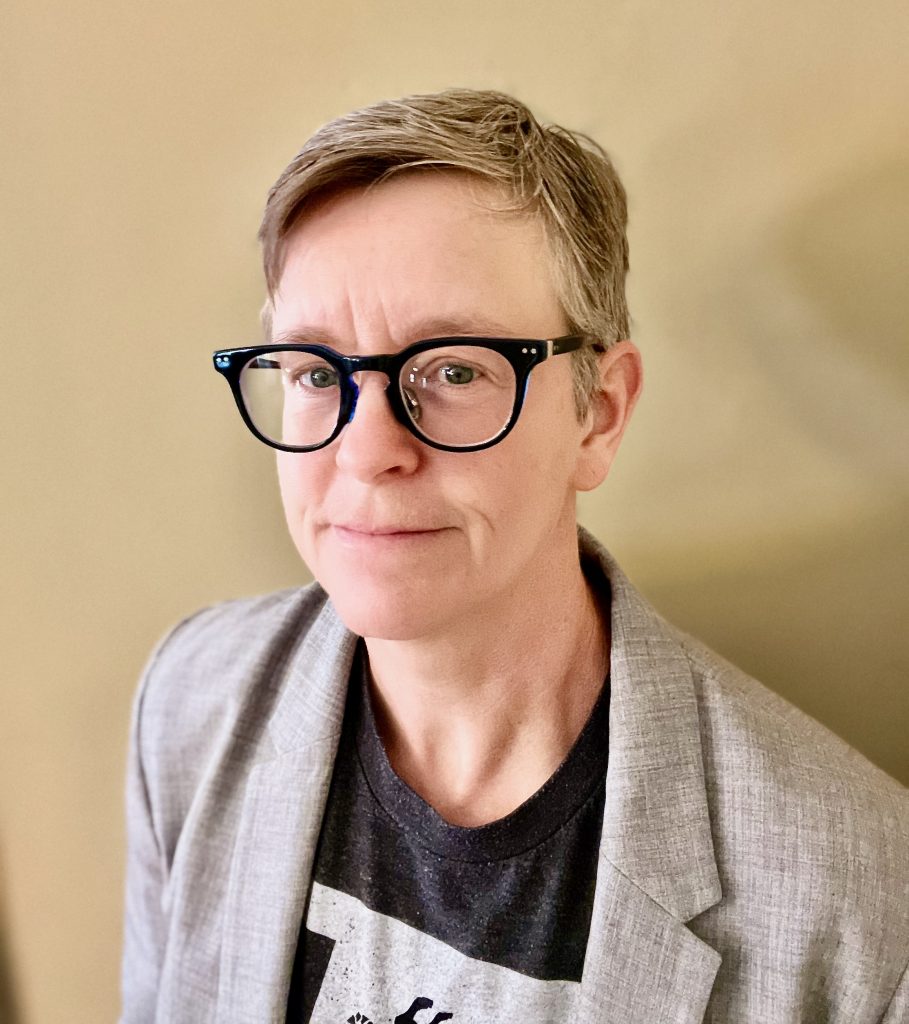
Stacy Takacs is a professor of American Studies at Oklahoma State University and the author of Interrogating Popular Culture and Terrorism TV: Popular Entertainment in Post-9/11 America.