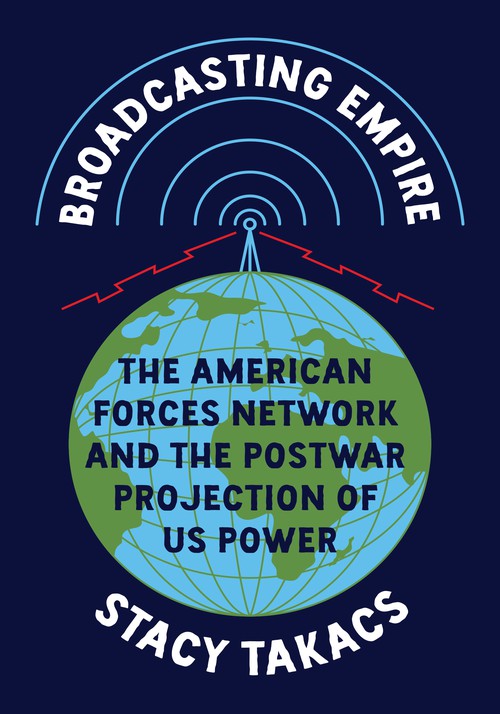
Broadcasting Empire
The American Forces Network and the Postwar Projection of US Power
The history and reach of the red, white, and blue broadcaster
Cloth – $125
978-0-252-04986-6
Paper – $32
978-0-252-08952-7
eBook – $29.95
978-0-252-04904-0
Publication Date
Paperback: 11/17/2026
About the Book
At first a tool to boost troop morale, the Armed Forces Network (AFN) evolved into a worldwide communications system that blended entertainment with spreading American culture and helping troops understand their missions.Stacy Takacs traces the AFN’s role in the worldwide expansion of American-style broadcasting and illuminates its impact on how foreign audiences viewed the United States. The AFN’s transformation emerged from collaborations between military leaders, foreign governments, commercial media companies, and local communities and turned the sprawling archipelago of US military bases into a potent instrument of soft power. Yet at times shifting alliances, practical problems, and the everyday routines of military life led to problems that complicated its mission
Knowledgeable and multidimensional, Broadcasting Empire combines big-picture analysis with case studies and oral history to reveal an important but overlooked tool of American influence.
About the Author
Stacy Takacs is a professor of American Studies at Oklahoma State University and the author of Interrogating Popular Culture and Terrorism TV: Popular Entertainment in Post-9/11 America.Reviews
“In Broadcasting Empire, Stacy Takacs presents a lively and much-needed history of one of the most globally influential yet overlooked aspects of American broadcasting history. Her original research and detailed account of military broadcasting’s roots, struggles, conflicts, and worldwide influence adds a long-overlooked perspective to contemporary work on audio media.”—Michele Hilmes, coeditor of Transatlantic Television Drama: Industries, Programs, and Fans
Related Titles