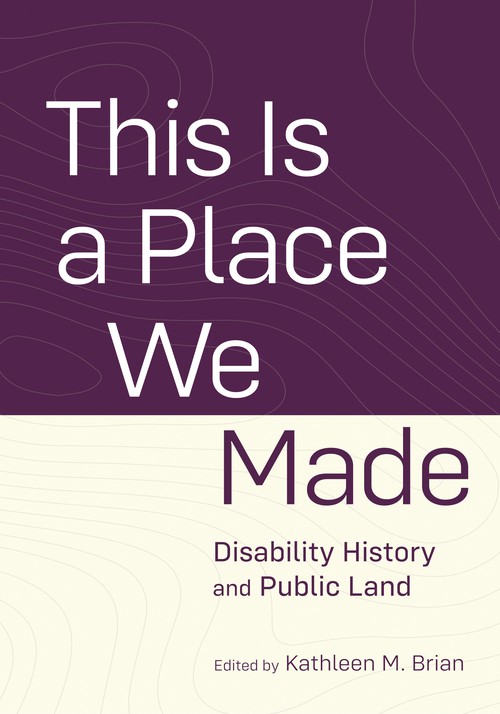
This Is a Place We Made
Disability History and Public Land
A multifaceted exploration of disability, past, and place
Cloth – $125
978-0-252-05989-6
Paper – $29.95
978-0-252-04929-3
eBook – $14.95
978-0-252-04930-9
Publication Date
Paperback: 01/26/2027
Cloth: 01/26/2027
Cloth: 01/26/2027
Series: Disability Histories
About the Book
How can histories of place foreground disability, ableism, and disabled people? How can disability histories root into place? Why does place-based disability history matter now? Kathleen M. Brian collects essays that, each in their own way, respond to these pressing questions.Disability and place constitute one another. Disabled people make worlds through creativity, adaptability, and reciprocal care, while disability offers distinctive routes to understanding present, past, and future worlds. At the same time, places evoke memory, story, and meaning—however contested—and influence how people understand and live disability. Informed by cutting-edge theories and inventive methods, the contributors’ brief studies of particular places highlight this mutuality. Framing the essays are open-ended questions and abundant resources that invite specialist and non-specialist readers alike to join ongoing conversations.
Innovative and world-making, This Is a Place We Made models what is possible when historical practice is guided by an ethics of access, collaboration, and proximity.
* Publication was supported by a grant from the Howard D. and Marjorie L. Brooks Fund for Progressive Thought. Additional funding from the National Council on Public History made open access publication possible.
About the Author
Kathleen M. Brian is core faculty in the interdisciplinary Honors College at Western Washington University.Reviews
“This Is a Place We Made offers smart, innovative, sometimes surprising historical analyses, and it does so with clarity and plain language. Remarkable.”—Susan Burch, author of Committed: Remembering Native Kinship in and beyond Institutions
Related Titles