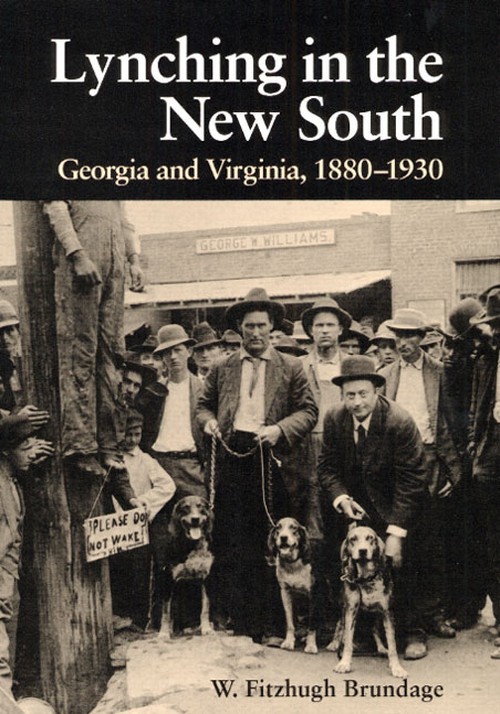
Lynching In The New South
Georgia and Virginia, 1880-1930
Unraveling the complexities of anti-Black violence
Paper – $28
978-0-252-06345-9
eBook – $29.95
978-0-252-05373-3
Publication Date
Paperback: 05/01/1993
About the Book
In 1905, the sociologist James Cutler observed, "It has been said that our country's national crime is lynching." If lynching was a national crime, it was a southern obsession. Based on an analysis of nearly six hundred lynchings, this volume offers a new, full appraisal of the complex character of lynching. In Virginia, the southern state with the fewest lynchings, W. Fitzhugh Brundage found that conditions did not breed endemic mob violence. The character of white domination in Georgia, however, was symbolized by nearly five hundred lynchings and became the measure of race relations in the Deep South. By focusing on these two states, Brundage addresses three central questions ignored by precious studies: How can the variation in lynching over space and time be explained? To what extent was lynching a social ritual that affirmed traditional values? What were the causes of the decline of lynching?The book's multidisciplinary approach and the significant issues it addresses will interest historians of African-American history, the South, and American violence. At the same time, it will remind a more general audience of a tradition of violence that poisoned American life, and especially southern life.
About the Author
W. Fitzhugh Brundage is William Umstead Distinguished Professor at the University of North Carolina. His books include Civilizing Torture: An American Tradition and The Southern Past: A Clash of Race and Memory.Also by this author
Reviews
Blurbs
"The research is formidable, the analysis sophisticated. Clearly, this is the best work ever written on lynching."--Numan V. Bartley, author of The Rise of Massive Resistance: Race and Politics in the South during the 1950s
Awards
• Winner, Merle Curti Award in American SOCIAL History (OAH), 1994Related Titles