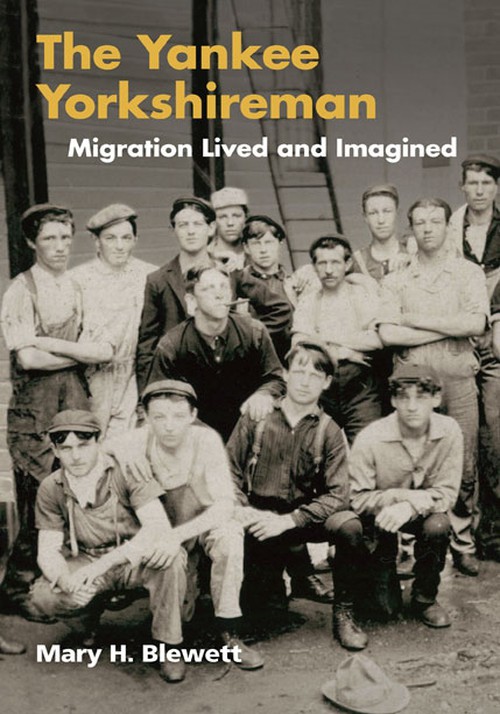
The Yankee Yorkshireman
Migration Lived and Imagined
Understanding migration through the lives and fiction of migrant workers in New England
Paper – $30
978-0-252-07613-8
Publication Date
Paperback: 03/24/2009
Series: Studies of World Migrations
About the Book
This study is a textual and contextual appraisal of the writings of Yorkshire-born Hedley Smith (1909-94), whose depiction of the fictional mill village of Briardale, Rhode Island, captures an early twentieth-century labor diaspora peopled with textile workers. Enraged and embittered at the transformatory experience of his own emigration, Smith used fiction to explore Yorkshire immigrants' culture and stubborn refusal to assimilate, their vital sexuality, and their vivid social customs. As Smith's writings reveal, emigration involves grief and anger, often universally concealed and problematic. Adopting a transnational perspective, Mary H. Blewett links Smith's fictional community to empirical data on the substance of working-class lives both in Yorkshire and in New England's worsted textile industries.About the Author
Mary H. Blewett is a professor emerita of history at the University of Massachusetts Lowell. She is the author of Constant Turmoil: The Politics of Industrial Life in Nineteenth-Century New England and Men, Women, and Work: Class, Gender, and Protest in the New England Shoe Industry, 1780-1910.Also by this author
Reviews
"[A] fascinating biography."--American Historical Review"Deserves to be read by all scholars and students interested in migration and dislocation."--Journal of American Ethnic History
Blurbs
"In a stimulating way, Blewett interweaves labor, community, technology, gender, and sexuality in a story of the textile industry in a local, regional, British, and Atlantic context. A truly significant contribution."--Dirk Hoerder, author of Cultures in Contact: World Migrations in the Second Millennium
Related Titles