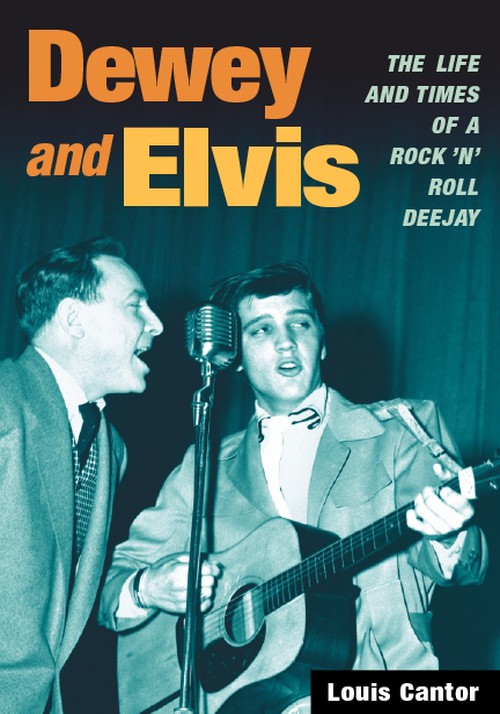
Dewey and Elvis
The Life and Times of a Rock 'n' Roll Deejay
The pioneering deejay who brought rock 'n' roll to Memphis
Paper – $24.95
978-0-252-07732-6
eBook – $19.95
978-0-252-09073-8
Publication Date
Paperback: 04/10/2010
Series: Music in American Life
About the Book
Beginning in 1949, Dewey Phillips brought rock 'n' roll to the Memphis airwaves by playing Howlin' Wolf, B. B. King, and Muddy Waters on his nightly radio show Red, Hot and Blue. The mid-South's most popular white deejay, "Daddy-O-Dewey" is part of rock 'n' roll history for being the first major disc jockey to play Elvis Presley (and subsequently to conduct the first live, on-air interview with Elvis). This book illustrates Phillips's role in turning a huge white audience on to previously forbidden race music. Using personal interviews, documentary sources, and the oral history collections at the Center for Southern Folklore and the University of Memphis, Louis Cantor presents a very personal view of the disc jockey while arguing for his place as an essential part of rock 'n' roll history.About the Author
Louis Cantor is professor emeritus of history at Indiana University. He is the author of Wheelin' on Beale: How WDIA-Memphis Became the Nation's First All-Black Radio Station and Created the Sound That Changed America, and A Prologue to the Protest Movement: The Missouri Sharecropper Roadside Demonstration of 1939, which was made into an award-winning documentary film.Reviews
"I could write a book about this book!. . . .This book is a MUST READ for all fans of blues and rock 'n' roll history. It's my book of the year, beating out The Dylan Chronicles (a close second). Triple A+."--Holler"Cantor's biography offers more than the story of an underappreciated disc jockey and his relationship to Elvis. Woven throughout the book is thoughtful, original, and illuminating research on the social history of race and how notions about racial identity and geographical space informed the ways in which the segregated white and black residents of Memphis interacted and were involved in one another's musical cultures and social spheres."--Journal of Southern History
Awards
• Winner, Choice: Outstanding Academic Titles, 2006Related Titles