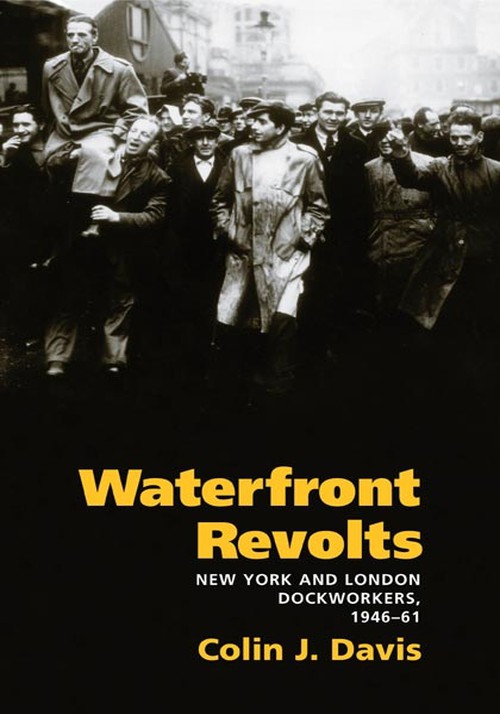
Waterfront Revolts
About the Book
During the decade that followed World War II, American and British dockworkers undertook a series of militant revolts against their employers, their governments, and even their union leaderships. In this in-depth comparative study, Colin Davis draws on a wide range of sources to explore the upheavals on both sides of the Atlantic.Davis examines the dynamics of work and work stoppage along the two pivotal waterfronts, showing how issues of race, organized crime, union affiliation, working conditions, and Cold War politics shaped waterfront uprisings and the state's response to them. He explores other key differences between American and British labor, such as the cultural forces that led to the emergence of rank-and-file dockworkers' movements, degree of governmental oversight, methods of obtaining work, and specifics of ethnic and racial identification.
Addressing questions of why dockworkers were such influential forces in the postwar industrial arena, Waterfront Revolts reveals how workers and trade unions directly influenced cold war politics, the economy, and culture--even across national borders.
About the Author
Colin J. Davis is a retired Distinguished Professor at the University of Alabama at Birmingham. He is the author of Power at Odds: The 1922 National Railroad Shopmen's Strike and Contested and Dangerous Seas: North Atlantic Fishermen, Their Wives, Unions, and the Politics of Exclusion.Reviews
"In exploring the nature and content of the immediate postwar revolts against the limits on dockworkers in London and New York, Davis has written an enlightening study of their politics and the impact of their struggle."--Business History ReviewThis book is a superb comparative study of the successes and failures of insurgent labor, and a tribute to the courage and determination of a militant rank and file. It is a timely reminder that the fight for democracy and human dignity is a constant struggle, both on the job and in everyday life."--Labor Studies Journal
Related Titles