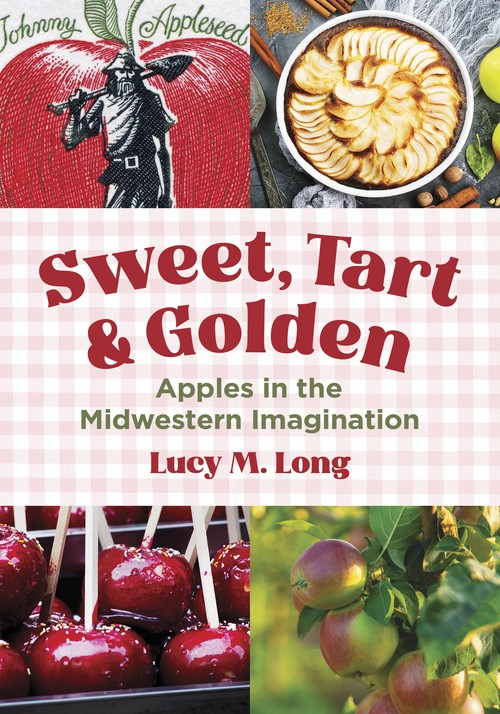
Sweet, Tart, and Golden
Apples in the Midwestern Imagination
Understanding the fruit that changed the Midwest
Cloth – $110
978-0-252-04978-1
Paper – $22.95
978-0-252-08945-9
eBook – $19.95
978-0-252-04895-1
Publication Date
Paperback: 04/14/2026
Cloth: 04/14/2026
Cloth: 04/14/2026
Series: 3 Fields Books
About the Book
Whether Jonagolds or Ida Reds, the apple provides Midwesterners with both a versatile food and a powerful archetype of their culture and heritage. Lucy M. Long examines the ubiquitous fruit’s place in regional culture and its role in how people in the Midwest think of themselves and the wider world. Long guides readers to festivals and introduces them to orchard owners while tracing the history of how apples became a central part of Midwesterners’ landscape, leisure, tables, and way of life. Johnny Appleseed folklore, sustainability and the apple business, the meanings behind the Grand Rapids Applebutter Fest, a recipe for apple caramel cheesecake—Long reveals a quintessential American fruit in all its glory.Lively and surprising, Sweet, Tart, and Golden blends food history with on-the-ground exploration to tell the multifaceted story of the apple.
* Publication of this book was supported in part by a grant from the L. J. and Mary C. Skaggs Folklore Fund.
About the Author
Lucy M. Long is the founder and director of the Center for Food and Culture. Her books include Culinary Tourism: Eating and Otherness.Related Titles