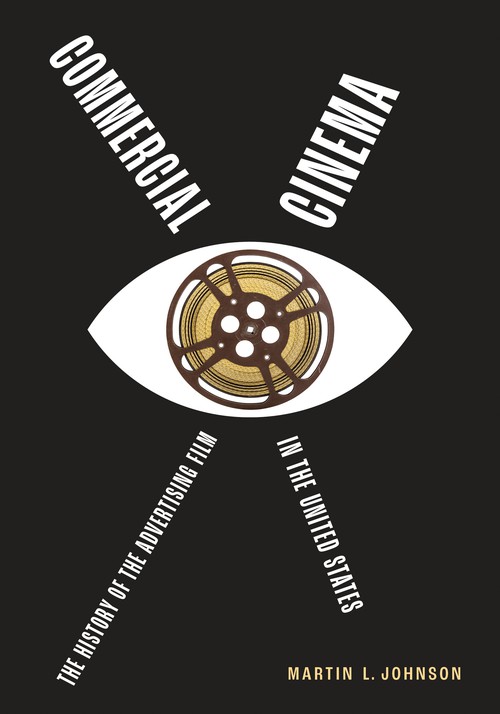
Commercial Cinema
The History of the Advertising Film in the United States
The development of a pervasive but little-known genre from 1910 through the 1940s
Cloth – $110
978-0-252-04989-7
Paper – $30
978-0-252-08955-8
eBook – $29.95
978-0-252-04905-7
Publication Date
Paperback: 12/15/2026
Cloth: 12/15/2026
Cloth: 12/15/2026
About the Book
Film audiences resisted blatant ads since cinema’s earliest days. The advertising film arose as a movie that masqueraded as entertainment or instruction to achieve its goals. Martin L. Johnson reveals the evasive history of advertising films through the actions of individuals, corporate sponsors and producers, and government agencies and non-profits that made, circulated, and showed them.An advertising film placed promotional content into movies presented as travelogues, educational shorts, industrial films, or scenes of daily life. Business and government, meanwhile, built systems to distribute the films to unsuspecting audiences in schools, churches, civic groups, and universities. Through experimentation, corporations honed sophisticated tools of persuasion that used moving images to influence the public. What they learned reshaped notions of storytelling, technology, and corporate communication while setting the stage for advertising’s symbiotic relationship with television.
Persuasive and expert, Commercial Cinema illuminates the changing fortunes and eventual fate of a film genre in disguise.
About the Author
Martin L. Johnson is a professor of English and comparative literature at the University of North Carolina at Chapel Hill. He is the author of Main Street Movies: The History of Local Film in the United States.Reviews
“What is an advertising film? Martin Johnson’s invaluable, meticulously researched study of its production, distribution, and exhibition in the early twentieth century reveals it to be a ‘genre of disguise.’ A variety of companies and even government agencies masked its promotional purposes in both fiction and nonfiction guises that circulated in a variety of commercial and especially non-theatrical venues (schools, religious institutions, city halls, civic clubs, showrooms, etc.). For the development of non-theatrical film, Commercial Cinema argues, the advertising film could not be more crucial.”—Richard Abel, author of Our Country/Whose Country? Early Westerns and Travel Films as Stories of Settler Colonialism
Related Titles