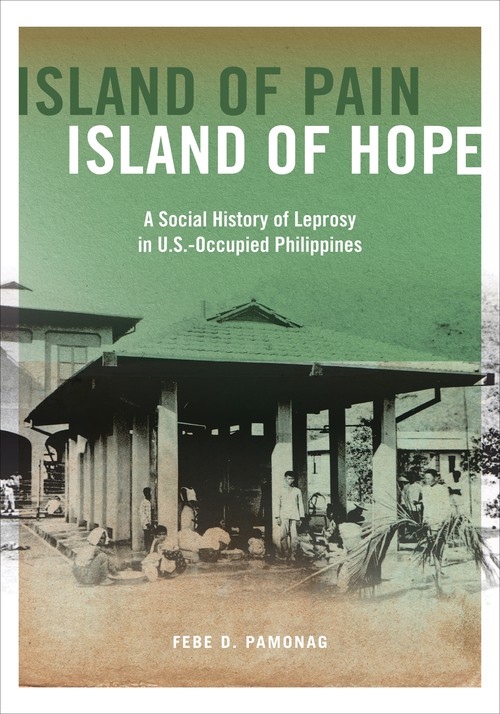
Island of Pain, Island of Hope
A Social History of Leprosy in U.S.-Occupied Philippines
The experiences of Filipinos navigating forced isolation
Cloth – $110
978-0-252-04999-6
Paper – $30
978-0-252-08968-8
eBook – $29.95
978-0-252-04919-4
Publication Date
Paperback: 12/29/2026
Cloth: 12/29/2026
Cloth: 12/29/2026
About the Book
In the early twentieth century, the colonial government of the United States in the Philippines confined people with leprosy on the island of Culion. Febe D. Pamonag examines claims that the policy protected public health and tells the stories of the affected men, women, and children.As Pamonag shows, Filipinos responded in many ways to the Segregation Law. Some resisted arrest and confinement. Others negotiated or complied because of family needs, fear, gender, class, and economic pressure. Rare archival documents reconstruct life inside Culion’s communities, where people fought for better food and living conditions and used the courts to challenge their confinement and assert their rights. Pamonag also highlights previously untapped accounts that reveal how women navigated the stigma of the disease and the gendered restrictions imposed on them.
A new chapter in the history of public health, Island of Pain, Island of Hope shows the courageous and creative ways Filipinos coped with life under colonial rule.
* Support for publication of this book was provided by the Richard D. and Janet L. Boynton History Honors Endowment at Western Illinois University.
About the Author
Febe D. Pamonag is a professor of history at Western Illinois University.Reviews
“An engaging and impressive work in the history of leprosy in the Philippines. Pamonag’s bottom-up approach challenges notions of Filipino resistance to authority, and draws on multidisciplinary literature on power, gender, resistance, and agency to contextualize a broad range of Filipino responses to a policy of mandatory isolation.”—Kerri A. Inglis, author of Ma?i Lepera: Disease and Displacement in Nineteenth-Century Hawai?i
Related Titles