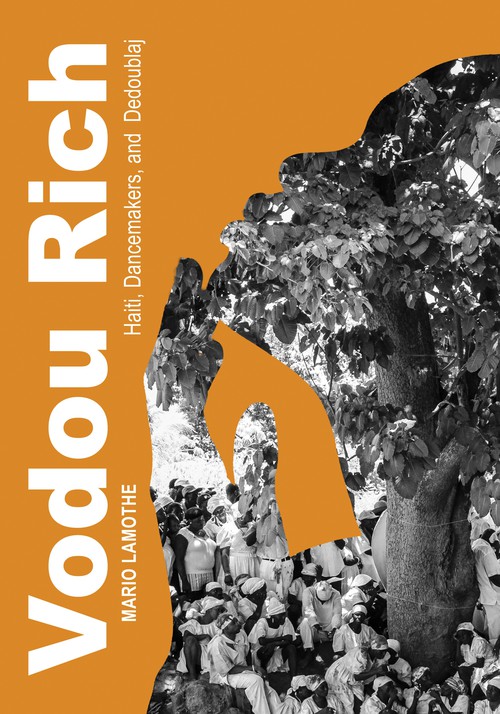
Vodou Rich
Haiti, Dancemakers, and Dedoublaj
Haitian dancers creating powerful acts of storytelling, healing, and resistance
Cloth – $110
978-0-252-04998-9
Paper – $32
978-0-252-08966-4
eBook – $29.95
978-0-252-04917-0
Publication Date
Paperback: 12/01/2026
About the Book
Contemporary dance in Haiti challenges global stereotypes of its people, their country, and their worldmaking. Mario LaMothe profiles four celebrated Haitian choreographers to examine the influences that nurtured the generative and transgressive dance practices found today in the Caribbean nation.LaMothe weaves Vodou teaching practices with humanist and social science theory to shed light on how choreographers move among ideas of Haitian bodies as vessels, producers, and traffickers of Vodou economies. As he shows, the dancemakers’ work maneuvers through national uncertainties and international caricatures of Haiti’s challenges. At the same time, it pivots between these phenomena via dedoublaj—the act of doubling, self-doubling, transformation, and soulful travel. LaMothe’s analysis of dedoublaj reveals how dancemakers reimagine Haitian bodies as self-possessed human beings remedying unjust practices, envisioning chances for solidarity and being, and setting a course for queerly paced futures.
Powerful and multidisciplinary, Vodou Rich explores Haitian dancemaking at home and its reception around the world.
* Publication of this book was supported in part by the University of Illinois Press Fund for Anthropology.
About the Author
Mario LaMothe is an assistant professor in the Department of Black Studies and the Department of Anthropology at the University of Illinois Chicago.Reviews
“Vodou Rich is at once intensely personal and expertly researched, a story that dances through genres of performance, queer theory, and Haiti’s recent history with an electric, at times irreverent, prose. It is an ambitious, haunting contribution, itself a dedoublaj and fè chay, highlighting lived experiences of ‘dance apartheid,’ Haiti’s 2010 earthquake, and one of its aftershocks of an anti-Vodou, anti-LGBT campaign.”—Mark Schuller, author of Humanity’s Last Stand: Confronting Global Catastrophe
Related Titles