Widows and Orphans First
About the Book
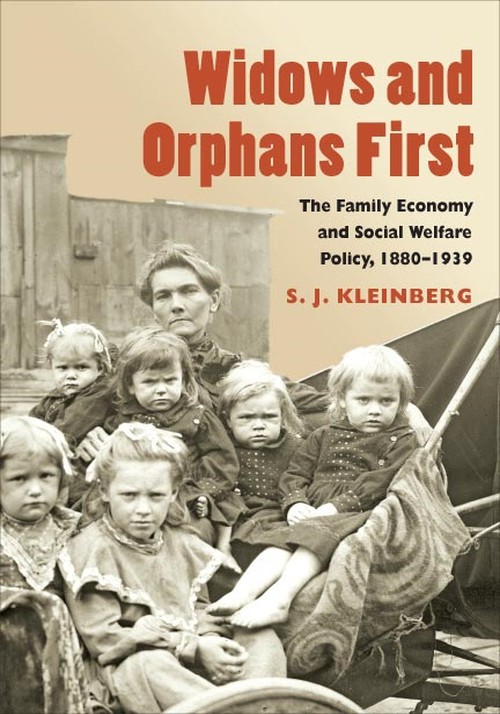
Widows and Orphans First investigates the importance of local economies and values in the origins of the welfare state through an exploration of widows' lives in three industrial American cities with widely differing economic, ethnic, and racial bases.In Fall River, Massachusetts, employment was regarded as the solution to widows' poverty, so public charitable expenditure was drastically limited. In Pittsburgh, where few jobs were available for women or children--and where jobs for men were in "widowmaking" industries such as steel and railroading--the city's charitable establishments were more sympathetic. In the border city of Baltimore, which had a large African American population and a diverse economy that relied on inexpensive child and female labor, funds for public services were limited, and African Americans tended to establish their own charitable institutions. In this unique comparative study of widows' welfare and family economy, Jay Kleinberg examines the role of children in society and the development of social welfare policy for widows.
About the Author
S. J. Kleinberg is professor at Brunel University and author of The Shadow Of The Mills: Working-Class Families in Pittsburgh, 1870-1907 and Women in the United States, 1830-1945.Reviews
"Offer[s] a compelling and important corrective to existing literature that too often uncritically celebrates the achievements of Progressive Era reformers."--Journal of the Gilded Age and Progressive Era"This examination of the widow's family economy in three comparative settings is immensely useful in understanding the variability of decentralized social welfare programs before federal entitlements. It deepens our understanding of the intersections between local economies and social welfare programs."--American Historical Review
"Historians are aware of the race and class biases built into social welfare; much time has been spent analyzing the gendered nature of social provisions. Kleinberg is well-versed in that literature and frequently links her account to the appropriate scholarship. Her original contribution here is to focus on one group of the so-called 'deserving poor'- widows-and examine the variety of social provisions affecting them over time."--Historian
Related Titles