Culture Makers
About the Book
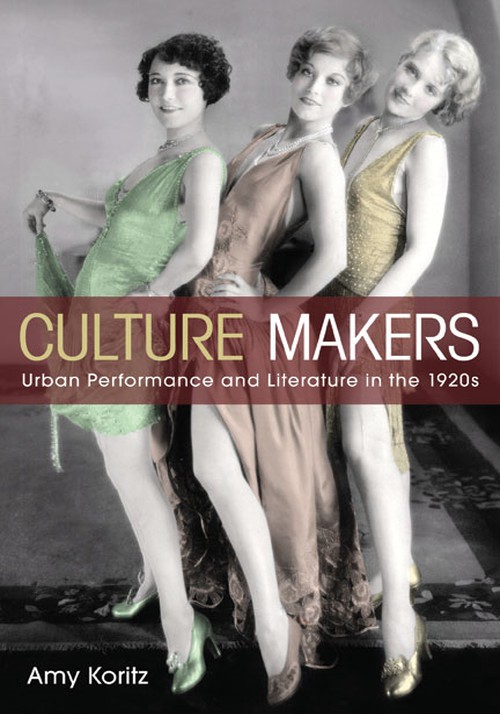
In this multidisciplinary study, Amy Koritz examines the drama, dance, and literature of the 1920s, focusing on how artists used these different media to engage three major concurrent shifts in economic and social organization: the emergence of rationalized work processes and expert professionalism; the advent of mass markets and the consequent necessity of consumerism as a behavior and ideology; and the urbanization of the population, in concert with the invention of urban planning and the recognition of specifically urban subjectivities. Koritz analyzes plays by Eugene O'Neill, Elmer Rice, Sophie Treadwell, and Rachel Crothers; popular dance forms of the 1920s and the modern dance and choreography of Martha Graham; and literature by Anzia Yezierska, John Dos Passos, and Lewis Mumford.About the Author
Amy Koritz is the director of the Center for Civic Engagement and a professor of English at Drew University. She is the author of Gendering Bodies/Performing Art: Dance and Literature in Early Twentieth-Century British Culture.Reviews
"Cleverly investigates ways in which drama, dance, and literature either embraced or challenged the rhythm of the time. . . . Highly recommended."--Choice"A lucid and insightful cross-genre study of the engagement between cultural producers and the transformations that took effect in American society in the decade often characterized as the Jazz Age."--American Studies
Blurbs
“Amy Koritz's engaging book brings together drama, dance, and fiction of the 1920s in paired case studies of ‘high’ and ‘low’ culture. Koritz provides an eloquent and refreshing collection of detailed, insightful case studies that illuminate the way in which artists, intellectuals, and cultural commentators used culture-making to pose ‘symbolic resolutions’ to key social and cultural tensions of modernity.”--David M. Scobey, author of Empire City: The Making and Meaning of the New York Landscape
"Amy Koritz makes a compelling case for the necessity of cultural production to a just society. Looking across an era, Culture Makers shows how several kinds of artistic producers and their work strove to make sense of radical changes confronting people in the 1920s United States. This excellent book speaks eloquently to dance studies, American studies, theatre studies, and architecture and urban design readers alike."--Linda J. Tomko, author of Dancing Class: Gender, Ethnicity, and Social Divides in American Dance, 1890-1920
Related Titles